
Selecting an ERP system is a strategic decision that will impact your company for years to come. It’s not just about software; it’s about improving processes, insights, and collaboration. That’s why a structured approach is essential.














A successful ERP selection begins with a clear understanding of your processes: finance, sales, purchasing, inventory, production, projects, service, and reporting. The system you choose must support and improve these processes.
Your business is constantly changing. A future-proof ERP system must be flexible enough to adapt as it grows—accommodating new users, additional modules, and changing market conditions.
Your ERP system never stands alone. It needs to integrate seamlessly with CRM, accounting, e-commerce platforms, or industry-specific apps. Strong integrations prevent silos and improve data quality.
The easier the ERP system is to use, the faster employees will start using it, and the faster you’ll see a return on investment. Ease of use reduces resistance and accelerates adoption.
Look beyond licensing costs. Also consider implementation, training, maintenance, upgrades, and any future expansions. That’s the only way to come up with a realistic budget.
Your hosting model primarily affects flexibility, costs, and management. SaaS and cloud solutions offer simplicity and automatic updates, while on-premises solutions provide more control but entail a heavier IT burden. A hybrid model combines both when necessary.
A successful ERP implementation always proceeds through several clearly defined phases. Each phase has its own objectives, deliverables, exit criteria, and best practices that contribute to a predictable and manageable project process.
Exactly which phases are involved depends on the implementation methodology you choose. Some processes involve detailed steps, while others take a more streamlined approach. One thing is certain: there is no one-size-fits-all approach that works for every organization. Every ERP project requires a customized approach, tailored to your processes, industry, and goals.

A successful ERP implementation is carried out in several phases, which are designed to ensure that the implementation of an ERP system proceeds efficiently.
During this phase, we’ll examine your organization’s specific needs and requirements. Clearly define your objectives for implementing the ERP system. The ERP partner will determine whether it’s suitable for your specific industry.
During the analysis phase, we gather detailed information to optimize your business processes. We assess your needs and requirements against the selected software. This is where we bridge the gap between pain points and solutions.
During this phase, we build a preliminary solution with a standard configuration, in which key users are trained in a secure environment. This gives users a better understanding of the new software and allows any potential obstacles to be identified early on. In addition, preparations for the data migration also begin.

We implement ERP solutions from leading providers such as Microsoft and Exact, supplemented with customizations when needed. Compare our solutions for your business.
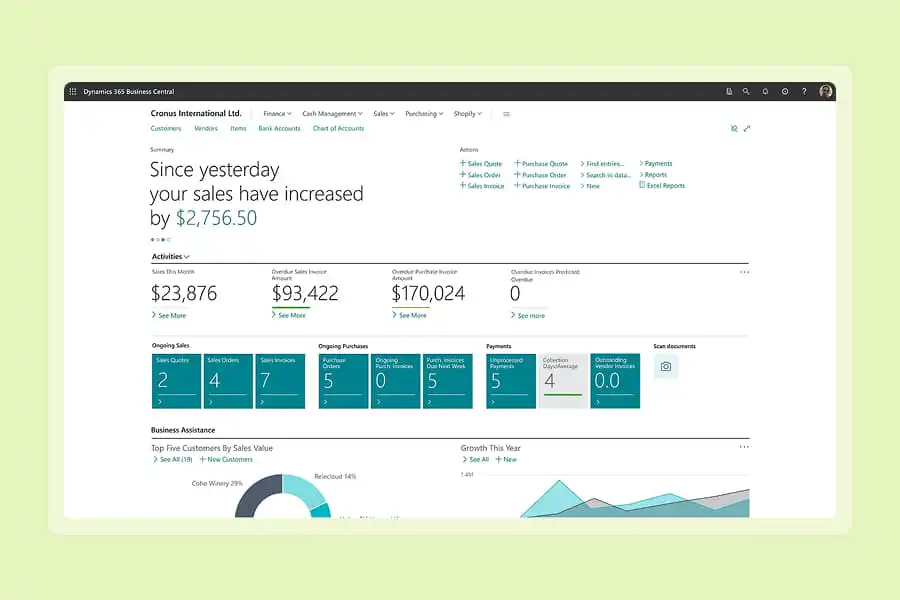
Flexible ERP for growth and innovation. Microsoft Dynamics 365 Business Central is a cloud-based ERP solution that brings finance, operations, and sales together on a single platform. Thanks to its integration with Microsoft 365 and Power BI, you can work more efficiently, with real-time insights and maximum scalability. Ideal for organizations that want to grow and digitize their processes.
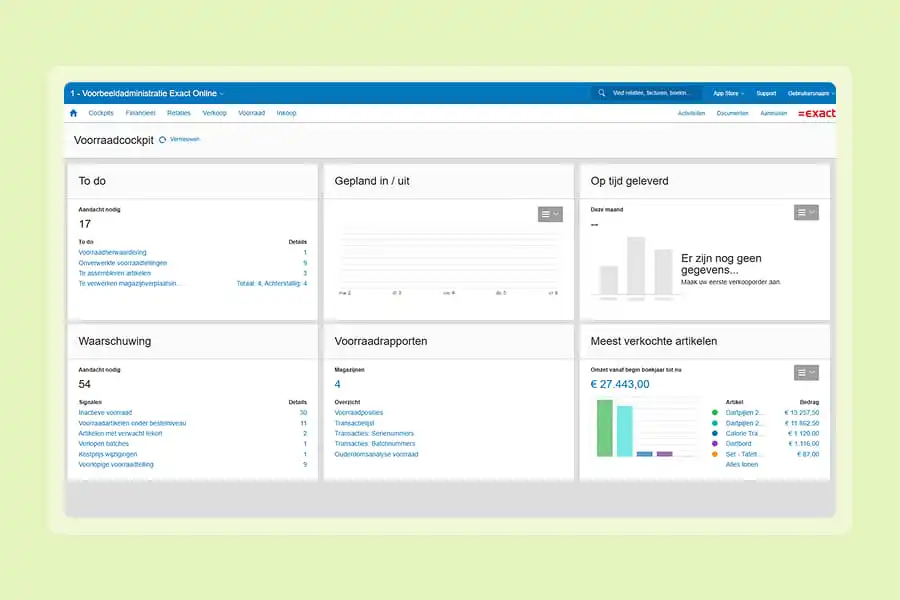
Exact offers user-friendly ERP software that lets you manage your finances and business processes in a clear and organized way. The platform excels in administration and compliance and is well-suited for small and medium-sized businesses (SMEs) that prioritize stability, control, and rapid implementation.
The cost of Microsoft Dynamics 365 Business Central depend on your organization, processes, and growth plans. With the online cost calculator Gyde 365 You'll quickly get an idea of what Business Central will cost for your situation. No guesswork—just a realistic cost estimate, so you know exactly where you stand before you invest.

Have you been working with Exact for years, or are you just getting started? In either case, the right Exact partner can help
In version 29, Business Central continues to evolve into an AI-driven ERP platform with a strong focus on automation through smart

Do you want to integrate Exact with other software? Find out when an existing integration is a good fit or when you need a specific integration
Alistar is a Microsoft Certified Partner for Business Applications and has a team of experienced business consultants, engineers, and experts who are happy to guide you through the entire process. Our goal is to ensure that your ERP project runs as smoothly as possible.

Implementing the project in phases helps minimize risks. This also makes the process less disruptive for the organization and its users. In addition, you can provide feedback during each phase of the implementation and quickly resolve any issues that arise.
Choosing the right ERP solution starts with a clear understanding of your business processes and future growth. Keep the following criteria in mind:
Tip:
Make a shortlist of 2–3 solutions and have demos created based on your processes. That way, you’ll immediately see which solution is the best fit.
The exact duration varies greatly from one organization to another. It is important to remember that implementing an ERP system is not only a technical process but also an organizational one. The duration may also depend on the company’s capacity to handle the changes.
Absolutely. We offer your organization support from selection through implementation, including change management, integrations, and training.