
“About 20 years ago, the American company Luv n’ Care®, which produced all Nûby”™ develops and markets baby products in the United States and Canada and was looking for a reliable distributor in the Benelux. We became that distributor, and from our base in the Benelux, we’ve since expanded into Europe, Africa, Russia, and parts of Asia, among other regions. In total, we’re now present in more than 65 countries.”
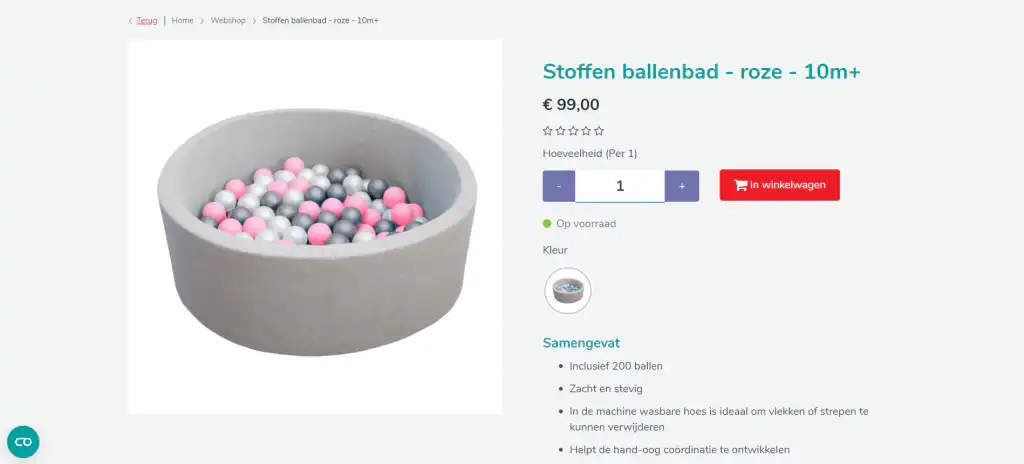
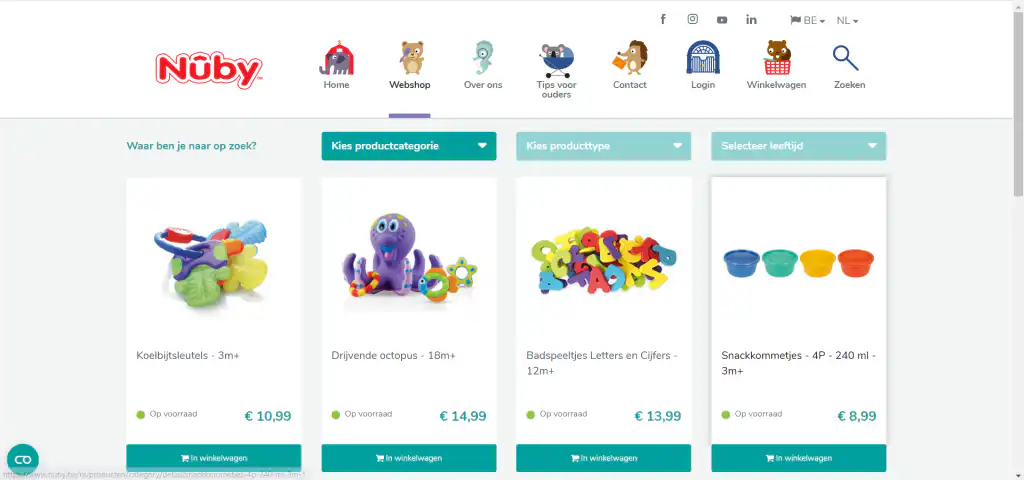
“We distribute sippy cups, pacifiers, bath toys, bibs, teething rings, and and so on. The common thread is supporting babies (and children up to age 6) in their ‘oral development.’ We strive to clearly highlight this distinction from our competitors. Globally, Nûby™ products are available in more than 140 countries. In our niche, we are one of the few brands that distributes such a broad range so widely. Besides us, there are a few other distributors in other continents and countries, but together with New Valmar, we are one of the largest independent distributors.”
We have already successfully completed several projects with Alistar.
Pieter Van Mulders, Director of Operations


Collaboration with Alistar
“Our very first contact with Alistar came through our telecom provider. The woman from that company told me she would bring along an additional expert ‘who knew quite a lot about Microsoft Office 365’. Alistar quickly proved to be a good fit for us.”
“These days, working with Alistar is a huge advantage for us. Alistar can consistently offer at least two solutions from their portfolio. Thanks to their extensive selection and independent advice, we don't have to settle for pre-packaged options. ”We always take specific needs into account to provide a personalized solution."
An Interview with Pieter Van Mulders
Processing incoming orders and automate of complex manual processes.
We developed a tool for OVS, a large Italian retail chain with more than 400 stores, where we manage our own ‘shelf space.’ We know the stock levels at every store we supply, what we’ve shipped, and when everything has been sold to their end customers. What we need to do is not only ensure that supplies there don't run out, but also make sure that we don't end up with too much inventory. This, combined with optimizing transportation costs. We then send our own agents there, who stock the shelves themselves. For such optimization processes We brought Alistar on board.
We also have a lot of business intelligence required.
Because we operate in so many countries and therefore work with at least as many local partners, a lot of data is scattered across various locations. Through the tools offered by Alistar, that information is pulled into a shared pool of pivot tables. Zso that it becomes much easier to conduct analyses and make smarter decisions—based on the latest facts and figures.
In addition, we also use a PIM, or ‘Product Information Management,’ solution.
That’s a kind of data silo. In the past, it was always quite a challenge to keep all the data—which was stored in various locations across our server network—up to date and consistent. For example, if you update a product description on the website, that update has to be made in all other places where that product is displayed. That’s why we’ve Everything is centralized in the PIM-system: The logistics data from our ERP system is then supplemented here with, among other things, scientific product information texts, USPs, videos, photos, and detailed marketing information—elements that the ERP system was not designed to handle. This data silo is linked to our website and label files, among other things, so you only have to update everything once. We’re also planning to link this PIM to the GS1 Database.
All major customers are asking for this solution—for example, Delhaize-Ahold, Carrefour, Colruyt, DM, Rossmann, and others. Instead of uploading our logistics data to each of these customers individually. Do you load the data once into the GS1 database and our client imports data from the GS1 database. This ensures that all parties always have access to consistent and up-to-date information.
Customers can place orders with us in four ways.
We use both:
- EDI (among multinational companies)
- a user-friendly sales app for smaller customers who are visited by our sales representatives.
- There are customers who do everything by email or fax continue to apply
- On the B2B website. Where they can place and manage their own orders.
Example: Auchan
This large French retail chain processes orders from its 200 stores in France, electronically via EDI—a protocol that, like GS1, many major players in the industry require their suppliers to use.
We receive these EDI orders automatically in our ERP-system and then verify whether everything can be shipped. The customer receives an electronic notification of this. The order to be shipped is then sent directly to the warehouse to be scanned. After that, the specific customer labels are printed and affixed to the boxes.
Next, we arrange for shipping. We have good working relationships with various shipping companies. Which one we use depends on the country of delivery and whether we need to ship the goods in boxes or on pallets.
As soon as the order has been picked and processed, our customer receives a DESADV (Dispatch Advice) message electronically—the digital version of a packing slip. In the shipping area of our warehouse, shipping labels are then affixed to the various boxes along with all shipping documents. Finally, the invoice is also sent to the customer via EDI.

We try to automate as much as possible.
Arrangements with the transportation companies are handled through another partner in the ERP system, which contacts a carrier electronically. In our warehouse, shipping labels are generated automatically and CMR rolled out of the printer. The customer and the representative will receive a message containing the shipment details, delivery address, and tracking number, to use ‘track & trace’ to check where the order is. Our customers really appreciate this extra service.
In a market where things that ordered today are, Delivered tomorrow must be you can't fall behind in automation. We are a company that, despite our sometimes somewhat tight budgets, wants to innovate continuously. The trend shows that orders aren’t increasing in volume, but they are being placed more frequently. Whereas five years ago we were still entering everything manually for the most part, now everything can be done with a single scan. If you can reduce the workload in the warehouse by as much as 20 percent, you’ll quickly recoup 50 percent of your investment in the first year.
Our scanning system is designed so that anyone can learn how to use it within 5 minutes and be ready to put it to use. In addition, you naturally also need people with specialized knowledge to closely monitor the proper functioning of the systems. After all, if problems arise, you need to respond quickly to avoid falling behind. This must be avoided at all costs in a market where exceptional service and speed are paramount.
A company that doesn't automate will be obsolete by next month. Thanks to our manager, who is always willing to explore automation and computerization, New Valmar remains vigilant strive to further optimize our workflow.