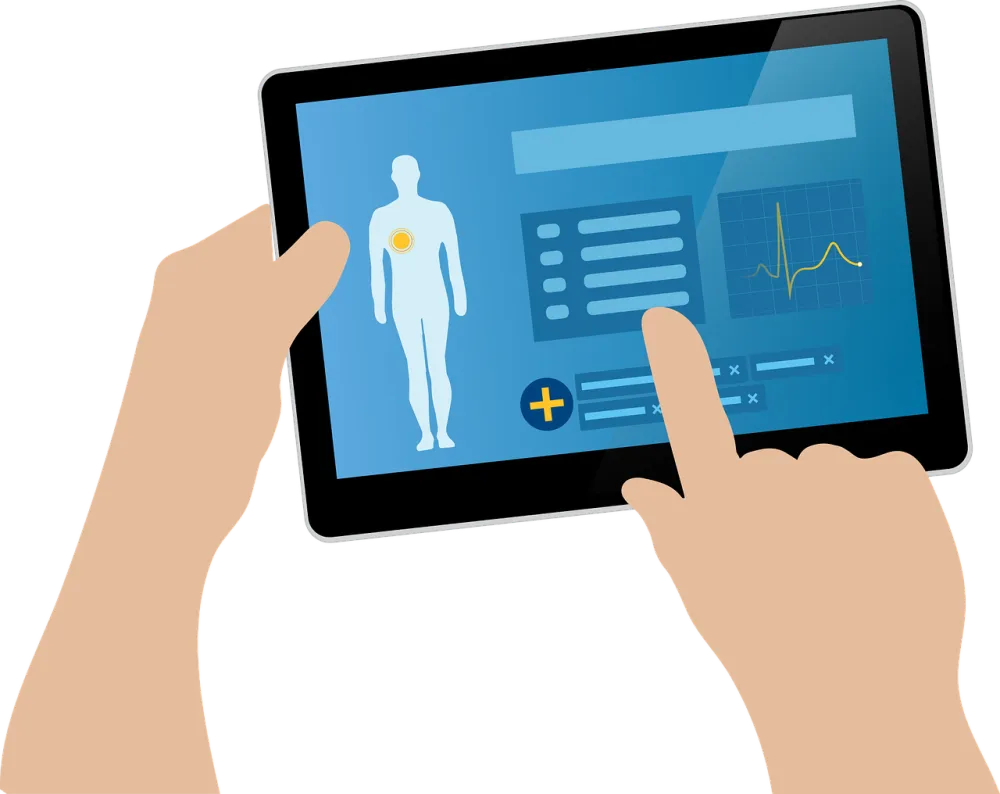
Our society is becoming increasingly digital. We communicate with each other via smartphones and apps, and social media keeps us up to date on (world) news. We receive radio and television digitally, and digitization is also taking place in healthcare. For example, the Meander Medical Center uses kiosks equipped with iPads to collect feedback from people who have visited the hospital. In addition, there is a vast array of patient and health apps available that allow patients to describe, save, and share their progress with their loved ones or healthcare providers.
Digitization is generally welcomed, but it also comes with risks—especially in the healthcare sector. In this blog post, I’ll outline the pros and cons for you.
eHealth
The umbrella term for all digitization in healthcare is eHealth. According to Zorgvisie, eHealth is ‘the use of technology to support or improve health and healthcare.’ A key theme in my previous blog post was clients’ self-reliance. Technology can help people who need care to remain independent and self-reliant for longer. On the other hand, eHealth can jeopardize the privacy of clients and patients. Below, I’ll list some other pros and cons of digitization in healthcare.
Benefits of Digitization in Healthcare
Both patients and healthcare professionals experience many benefits from using digital and technological innovations in healthcare. Just think of video calls between patients and healthcare providers. For many older adults and people with disabilities, it’s difficult to simply visit a primary care physician or specialist. In such cases, video calls with healthcare providers are a godsend. Radboudumc is introducing this option under the name FaceTalk. In addition, various health apps offer patients the ability to track their health and find reliable information on their own. According to the GGZ, eHealth should primarily ensure that mental health care remains widely accessible and affordable.
Digitization in healthcare not only makes things easier for patients, but it also fosters more efficient and effective collaboration between patients and healthcare providers.
Drawbacks of Digitization in Healthcare
In a recent article on Zorgvisie, Berend de Vries discusses one of the major drawbacks of digitization in healthcare: privacy concerns. According to him, healthcare workers primarily want to ‘take advantage of the possibilities offered by ICT to do their jobs well and quickly,’ but are not always aware of the privacy risks this entails. According to De Vries, the technology is not always secure but is primarily designed for ease of use. That needs to change so that healthcare workers can take advantage of its efficiency without worry. All the coverage surrounding the electronic health record indicates that privacy is a sensitive issue. Rightly so, in my opinion. Information about clients should not be freely accessible, and certainly not without people being aware of it. There is still room for improvement in that area.
Which is more important?
In an opinion piece on Computable, Marc Bloemendaal writes that it is high time for digitization in healthcare and that many stakeholders have a great need for it, but that several obstacles still stand in the way. I think that for many clients, employees, and healthcare organizations, the benefits currently outweigh the drawbacks. Apps that are highly accessible via smartphones and tablets are particularly popular among clients. Meanwhile, healthcare workers and organizations are still waiting for flexible systems that will make their work much more efficient. Thanks to clients’ self-reliance and digitization, cost-cutting measures can be implemented in other areas. Cumbersome systems can be phased out, and the financial landscape for the coming years is changing. Want to learn more about modern healthcare entrepreneurship?