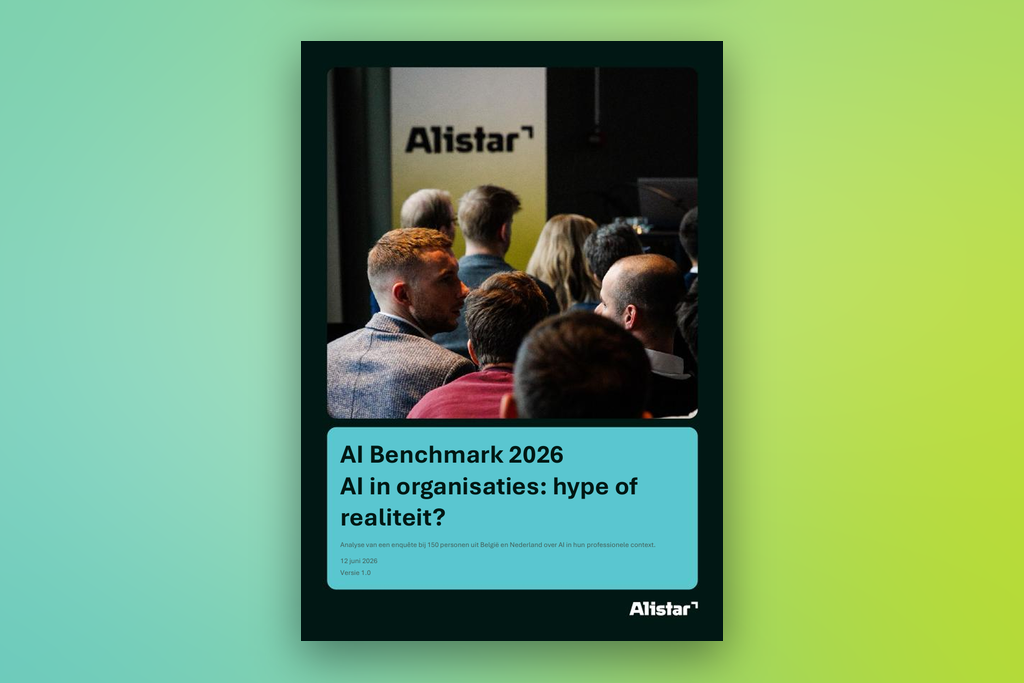
AI in Organizations We’ve moved past the question of “Do we believe in it?” That belief is already there in abundance. Yet most companies—and certainly SMEs—get stuck when it comes to implementation. In our AI Benchmark 2026, we surveyed 150 organizations in Belgium and the Netherlands, and the picture that emerges revolves around three tensions. Anyone who understands them will immediately know why a well-thought-out AI Strategy for SMEs is no longer a luxury, but a prerequisite for staying current.
Tension 1: Faith vs. Scale
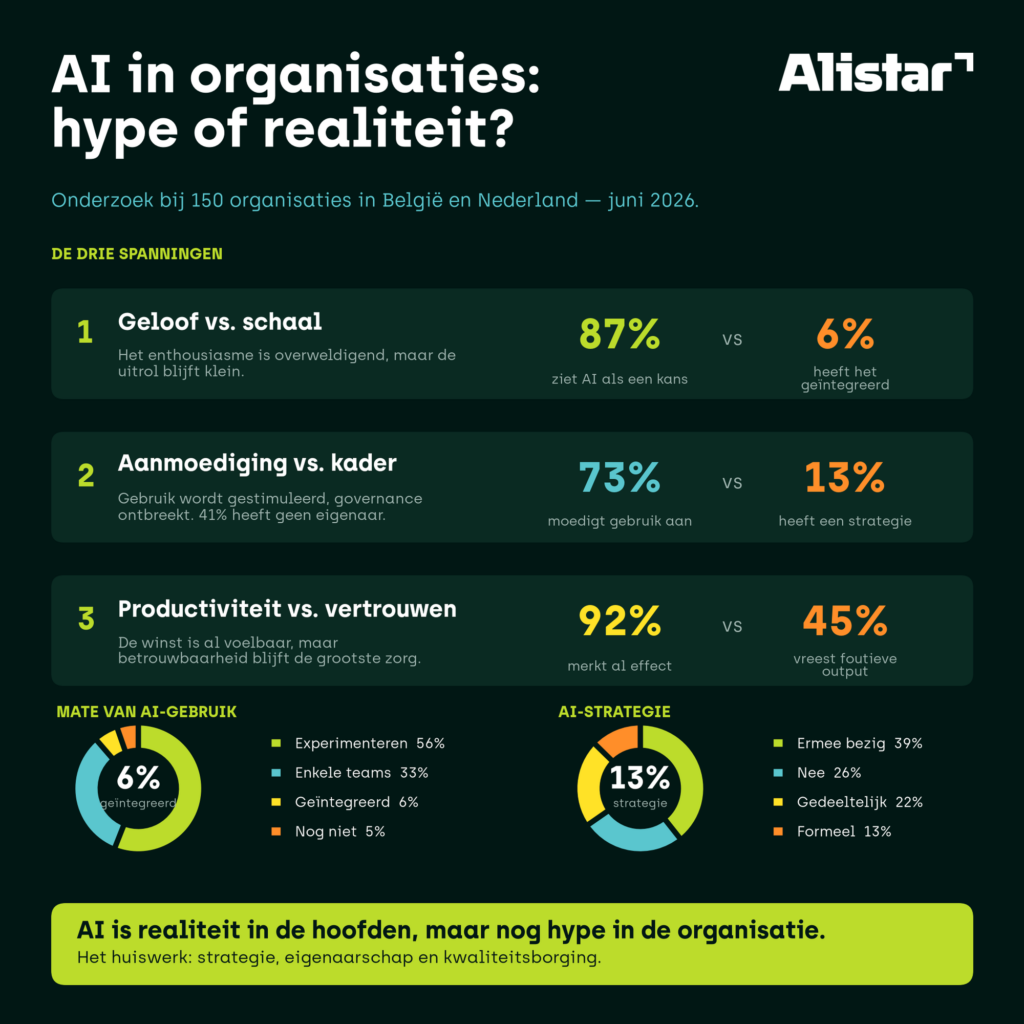
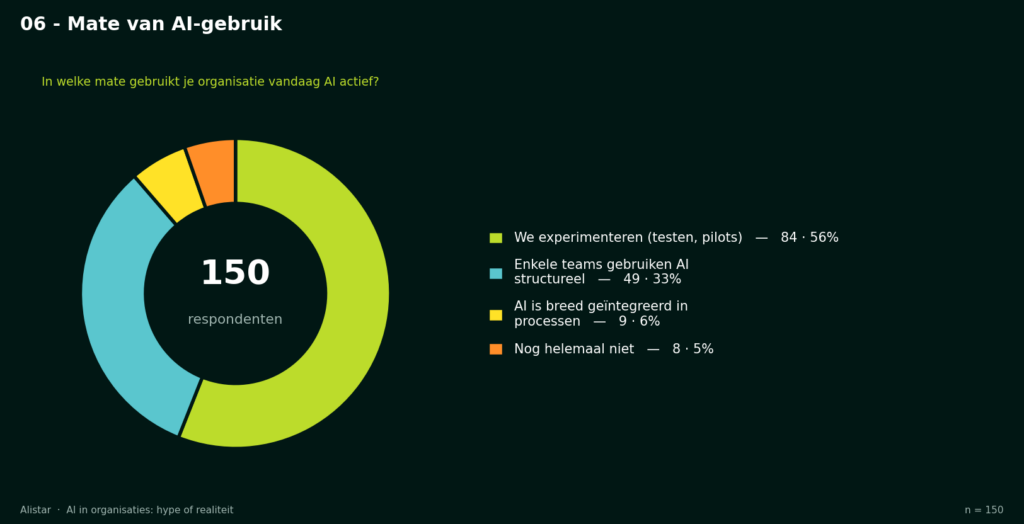
Enthusiasm for AI within organizations is nearly unanimous: 87% sees AI as a tremendous opportunity And 95% believes that anyone who ignores AI will fall behind within five years. But that belief has yet to translate into action on a large scale. Only 6% has widely integrated AI in the processes; the vast majority (56%) are still in the experimental phase.
For SMEs, this gap is particularly acute: without the time and guidance needed, promising pilot projects remain isolated efforts. The ambition is there; what’s missing is the structure to scale them up.
Tension 2: Encouragement vs. Structure
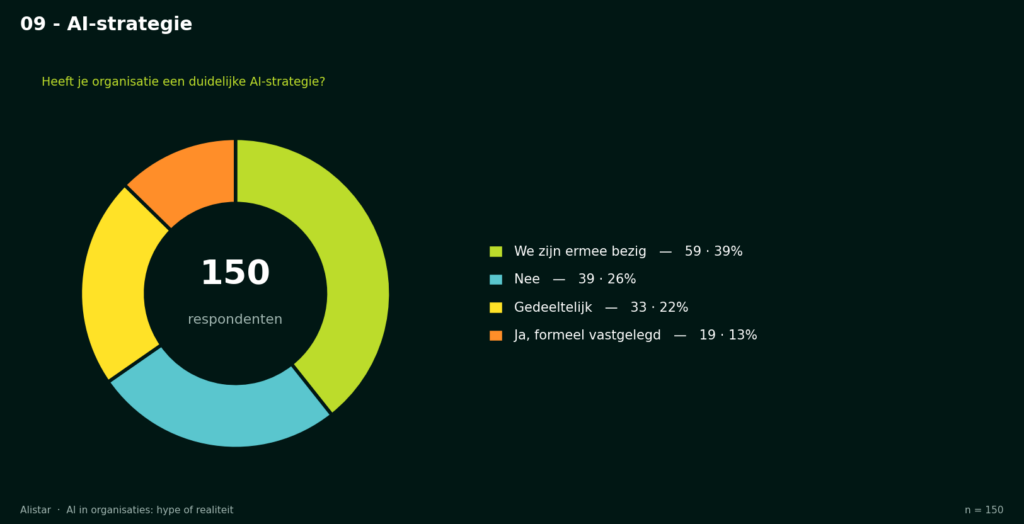
The second risk is the most dangerous. Organizations are widely encouraging the use of AI — 73% actively stimulates — but forget to put it into context. Only 13% has a formal AI strategy and No one is explicitly responsible for 41% for AI.
Tension 3: Productivity vs. Trust
The third tension is both hopeful and cautionary. 92% is already seeing tangible results today Of those using AI, half clearly say they are more productive. But tellingly, the biggest concern is not privacy or legislation, but incorrect, unreliable output (45%).
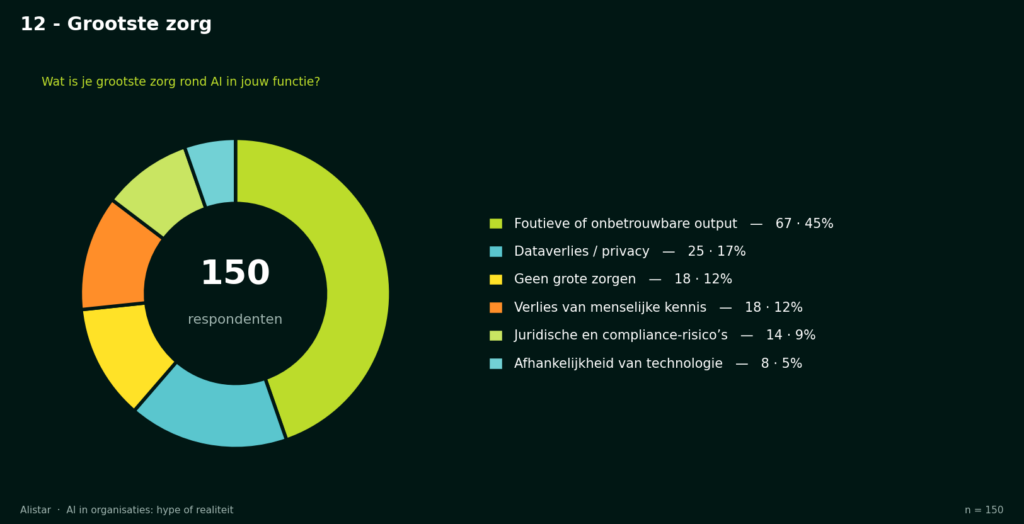
So the benefits are already evident, but trust has yet to follow. Quality assurance—monitoring output, clear guidelines, and people who know how to use AI effectively—will be the next hurdle.
Conclusion: From Hype to Solid Ground
In summary, AI in Organizations Today, it’s a reality in people’s minds and in day-to-day productivity, but it’s still just hype when it comes to embedding it in the organization. The three tensions—belief vs. scale, encouragement vs. structure, productivity vs. trust—all point to the same task: Strategy, ownership, and quality assurance.
That's good news for SMEs. You no longer have to convince anyone that AI matters—that battle has been won. The next step is a workable AI Strategy that turns those experiments into sustainable returns.
Get an overview of all the figures by country and by position.