

Every trip counts, and so does every invoice
How a Custom-Built Landscape Evolved into a Future-Proof Platform
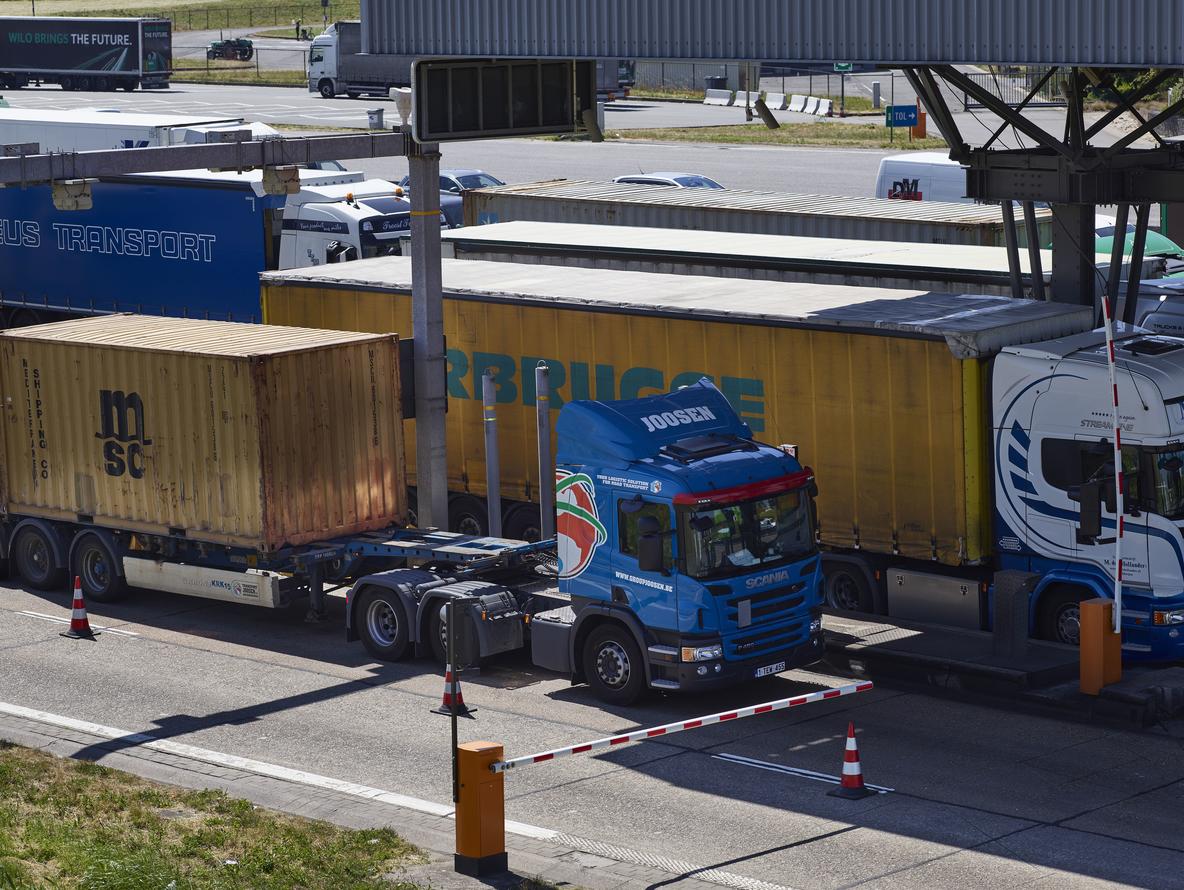
Anyone driving through the Liefkenshoek Tunnel rarely thinks about what happens behind the toll gate. Yet there’s an entire digital chain behind every passage. Customer data, contracts, authorizations, Teletol badges, toll transactions, and invoices must be processed accurately and on time. Since 2026, this has also included Peppol invoicing.
For the Liefkenshoek Tunnel, this is not just an administrative formality. These applications directly affect day-to-day operations and revenue. If something goes wrong, the customer notices—and so does the accounting department.
A Solid Foundation of Custom Work
Alistar has been working with Tunnel Liefkenshoek for years. During that time, the existing custom software environment was thoroughly assessed. This included applications for importing toll data and CODA files, corrections to toll transactions, pre-billing, the creation, printing, and sending of invoices, and the processing of certificates. In addition, there were internal web applications for testing and pre-billing, toll corrections, and customer management.
Further development also took place on the customer side. Through the Teletolbadge portal Existing customers can request additional badges and pay for them immediately. In doing so, Alistar looked not only at what the user sees on the screen, but also at what happens behind the scenes: document workflows, payment processing, and the integration with administrative systems.
That says a lot about this process. The e-business solutions are not isolated. They link customer interactions with the organization's financial and operational processes.

A Closer Look at the Invoicing Process
In 2025, the collaboration took another step forward. Alistar analyzed the entire invoicing process, both technically and from a UX/UI perspective. This revealed some clear areas for improvement: processes that could stall without anyone noticing, jobs that did not resume automatically, limited logging, complex SQL processing, and an overly vague distinction between test and production data.
The screens were also redesigned. Forms were given clearer labels and validation rules, related information was displayed together, and unnecessary clicks were eliminated. For long-running background processes, there are now statuses, timestamps, and notifications. This allows employees to immediately see what has been started, what is complete, what has failed, and where action is needed.
A more attractive interface was never the ultimate goal. The workflow needed to be more transparent, easier to control, and less reliant on manual follow-up.
Ready for Peppol Invoicing
As of January 1, 2026, Belgian businesses subject to VAT must use structured electronic invoices when transacting with one another. A PDF attached to an email is no longer sufficient. The exchange takes place via a structured network such as Peppol.
Alistar therefore developed the integration with Billit and Peppol. Electronic invoices are created, validated, and sent via the Peppol network from the existing invoicing environment. At the same time, customer preferences, alternative delivery methods, and the integrations with Exact Synergy and Globe had to continue functioning as usual.
In early 2026, the Peppol functionality went live. This meant that the Liefkenshoek Tunnel was ready for the new regulatory environment without disrupting existing processes.
A single integrated billing workflow
In 2026, the invoicing process underwent further structural revisions. Individual adjustments were consolidated into a single, cohesive system:
- a revamped archive structure
- changes to the database and data models
- Improved PDF generation
- Delivery via Billit/Peppol, email, or the customer portal
- an updated SMTP configuration
- errors that are more clearly visible
- Better filters and filenames
- the controlled phase-out of outdated services
- Testing on staging before each release to production
Everything was tested step by step: first with limited datasets, then with representative copies of production data. Backup and restore procedures, release criteria, and support during the monthly billing runs were also part of the process.
That level of care is not a luxury. In this process, errors or delays have an immediate impact on billing, customer service, and revenue.
Continuity is part of the solution
Alistar not only builds systems but also ensures that everything continues to run smoothly. The applications are managed under a structured SLA, which includes technical support, incident and problem management, changes and releases, monitoring, backup and restore, and additional support during critical billing periods.
Development and releases are tracked in Azure DevOps, with separate staging and production environments and controlled deployments. The platform is integrated with Exact Synergy, Globe, Billit/Peppol, Amazon S3, SMTP, and SSRS, among others.
In this way, the collaboration evolved from one-off custom requests into a long-term partnership centered on a business-critical platform.
A modern foundation for the years ahead
The next step is well underway: the migration of CustomSolutions and Contracts & Mandates to .NET 10. This modernization reduces technical debt, eliminates outdated dependencies, and brings the applications back to a supported and secure platform.
In early November 2026, both upgrades were 90% complete. At the same time, the code is being migrated to GitHub, and the XML export of toll transactions is being automated. The new development environment enables additional automated code checks and detects vulnerabilities earlier.
.NET 10 is a Long-Term Support (LTS) version that Microsoft will support through November 2028. By adopting a fixed LTS release schedule going forward, future upgrades will remain smaller and more manageable.

Our vision: Business-critical software deserves a partner, not just a supplier
The story of the Liefkenshoek Tunnel is about more than just a new invoicing workflow. It shows how you can continue to improve software that has to run every day without compromising its functionality. Here are four lessons we’d like to share.
1. Get to know your landscape before it changes. It all started with thoroughly documenting what was already in place. If you understand how toll data, contracts, and invoices are interconnected, you can make targeted improvements without unexpected side effects.
2. User-friendliness is also a matter of control. Clear statuses, notifications, and error messages aren't just for show. They ensure that employees know what's happening and can take action in a timely manner.
3. Legislation is an opportunity to strengthen the foundation. The Peppol requirement could have been resolved quickly. The Liefkenshoek Tunnel used it as an opportunity to make its entire invoicing process more robust.
4. Modernization is a process, not a project. By regularly upgrading to supported LTS versions, you can avoid major, risky changes. Small, predictable steps keep a platform healthy.
Partners in Progress
From custom solutions for toll and customer processes, to UX and billing, to Peppol, operational management, and platform modernization: every step built on what was already in place. The common thread remained the same: simplifying complex processes, reliably supporting critical business operations, and laying a sustainable foundation for what lies ahead. For us, that is the essence of Partners in Progress.
Does your organization rely on mission-critical software?
Let's take a look together at how you can keep your processes reliable, compliant, and ready for the future.


