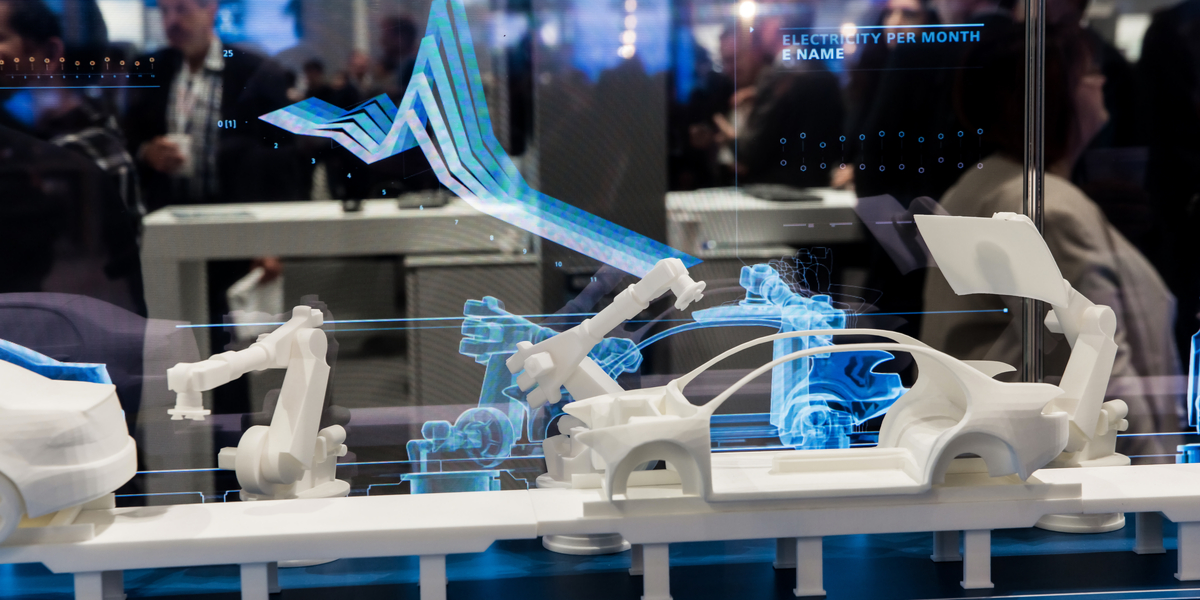
Without us always realizing it, an increasingly comprehensive digital twin of the world around us is taking shape. We use applications that, for example, provide a virtual view of where we are or what we’ll soon see. But what are the reasons for the manufacturing industry to embrace digital twins?
Reason 1: From Standardization to Personalization
In the manufacturing industry, too, individual customer preferences are becoming increasingly important. Thanks to digitization, consumers are now able to place orders directly with manufacturers in the manufacturing industry. These days, for example, you can configure your own car from your home office. But this means that production processes must be adapted more and more often, and manufacturers are no longer just making standard products. Higher levels of customization require a virtual solution to validate new product designs, since frequent testing and adjustment of physical production processes are far too costly.
Reason 2: A Higher Level of Predictive Maintenance
A digital twin is constantly fed with digital operational data from production facilities in a virtual environment. By using sensors and cameras to monitor the steps in the production process—and, for example, continuously tracking energy consumption data and emissions—computers that are becoming increasingly intelligent can predict maintenance needs. Digital twins thus contribute to greater continuity in the production process. This is invaluable because, in most cases, downtime is the largest cost factor.
Reason 3: Manufacturing higher-quality products
The main difference from testing on a physical production system is that a digital twin allows you to run many more scenarios at the same time. For example, you can calculate what will happen once systems in the production process have been in use for several years. As a result, digital twins lead to higher-quality products.
Reason 4: The Emergence of New Business Models
A manufacturer of navigation systems could provide important data for road maintenance in the future. Millions of smart cars equipped with sensors transmit data on every bump in the road. All those millions of people on the road don’t realize that, together, they are mapping out a ‘real-time’ world. We are convinced that there is still a wealth of untapped opportunities in the field of data.