
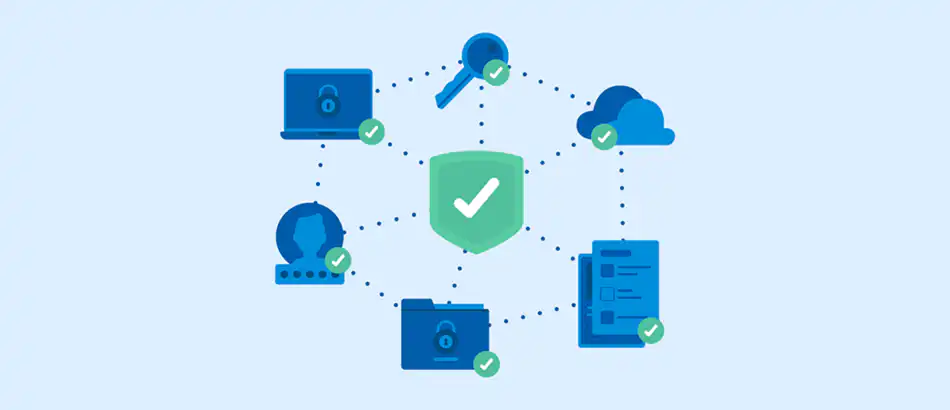
According to the Microsoft Digital Defense Report As of 2022, there is a growing sense of urgency to implement five minimum standards to enhance resilience against the increasing threats in the digital ecosystem. What exactly are these minimum standards?
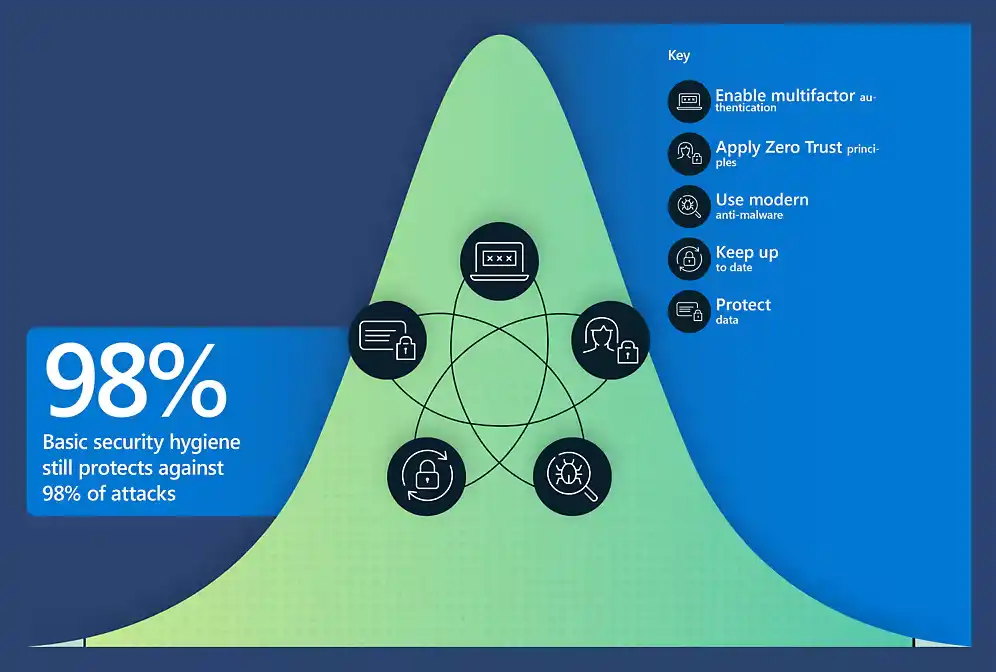
The infographic on the cyber resilience curve shows that your organization will be protected against 98% of the attacks, when these five basic practices for cybersecurity Measures to be implemented: Enable multi-factor authentication, apply zero-trust principles, use modern anti-malware software, stay up to date, and protect data.
1. Enable multi-factor authentication
MFA adds a ‘factor’ to the authentication chain. This means you need more than just your username and password. Because those other factors cannot be compromised in an online data breach, it is much harder for an attacker to gain access to your accounts.
2. Apply Zero Trust principles
Traditional security models often operate on the principle that everything inside a network can be trusted. Zero Trust This means that the internal network must be secured to such an extent that it no longer matters whether a client device is located within the corporate network or outside it on the Internet.
User credentials are no longer sufficient, since they can be stolen through phishing, keyloggers, ransomware, and so on. Therefore, the device must also be verified in order to be authenticated: Never trust, always verify. Regardless of where the request comes from or which source it accesses.
3. Use modern anti-malware software
Antivirus, antispam, and anti-malware are often bundled into a single antivirus solution that is installed on every device in your business. Ensure next-generation protection against viruses and malware with a modern anti-malware solution.
4. Stay up to date
Microsoft and most other software vendors release updates on a regular basis; these are often security updates. It is recommended that you use Microsoft’s standard Windows update methods to keep your systems up to date. Make sure the policies for both your servers and clients are properly configured so that updates are always installed.
5. Protect Your Data
Data security is the process of securing digital information throughout its entire lifecycle to protect it from corruption, theft, or unauthorized access. A data security partner takes these concerns off your organization’s hands. It covers everything from hardware, software, storage devices, and user devices to access and administrative controls.


