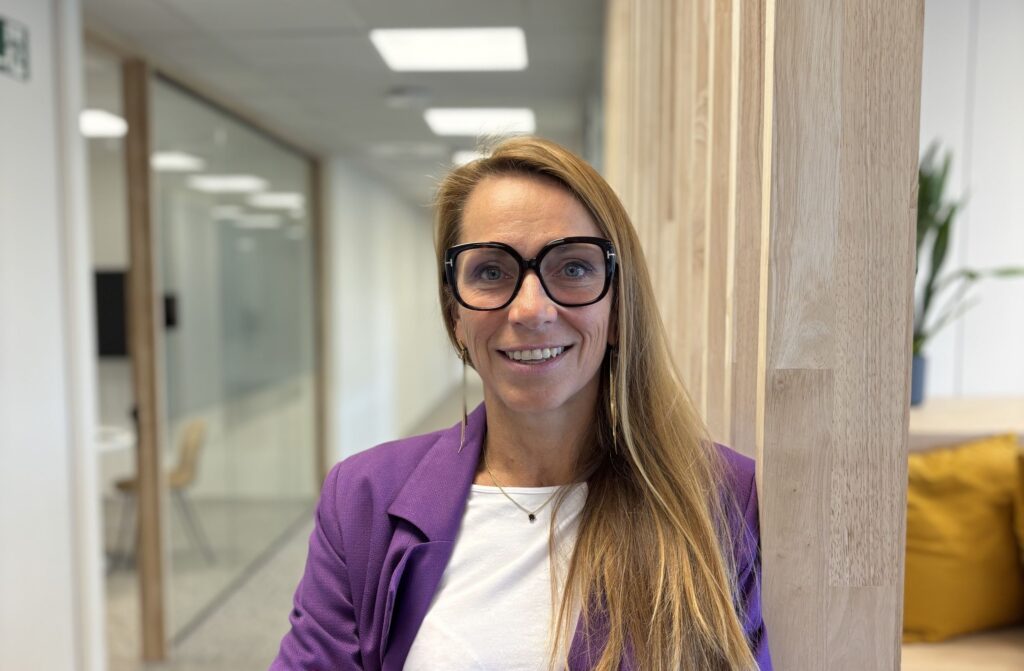
IT Manager Tom Mampaey Speaks Candidly About Floorhouse’s Business Software
FloorHouse offers more than 400 hardwood flooring options in a wide variety of wood species, over 800 laminate flooring options from all the well-known top brands, and an extensive selection of cork and vinyl flooring. The rapidly growing company, with locations in Antwerp, Aartselaar, Hasselt, Turnhout, and Wommelgem, makes the most of its strong regional presence and complements it with e-commerce powered by the central BuildMaster ERP software, based on Microsoft Dynamics NAV. In preparation for the “Rethink ERP” webinar, we spoke with IT Manager Tom Mampaey.
In addition to selling flooring, FloorHouse also offers a wide range of services, such as delivery, installation, maintenance, and the rental of various types of equipment. The company wanted to streamline its administrative work; it needed an online store; and the ERP system had to be able to be rolled out quickly if FloorHouse finds a new premium retail location.
Tom: “We’ve been through a lot when it comes to software. We started out a long time ago with a small Venice package that ran locally on our PCs, mainly for commercial management but without inventory management. We quickly realized we needed real ERP software and had a small local company develop a custom solution for us. It looked great—even back then, it was already in the cloud! Quite unexpectedly, however, they went bankrupt. I still remember a grueling night when we had to back up everything to files because the next day, the plug was irrevocably going to be pulled!”
“With that painful experience still fresh in our minds, we opted for a standard ERP solution from a mid-sized provider. It worked, but we still often had to jump through hoops. The integration with our online store wasn’t working properly, and that’s absolutely crucial in the retail and DIY sectors. In addition, the reporting capabilities didn’t meet our management’s needs. And running a business based on incomplete figures and gut feelings isn’t a good idea,” Tom continues. During Rethink ERP, the reporting functionality of Power BI in combination with Dynamics NAV shown.
“Another key reason we eventually ditched that software package was its poor user-friendliness. There was a steep learning curve that required intensive training, and sometimes we simply couldn’t get our people to understand it. All that time they had to invest in working with clunky software could have been better spent gaining product knowledge, learning about installation, and providing better service to our customers.”.
Here's how FloorHouse approached the ERP selection process
“In addition to our own experiences, we looked into what our colleagues and competitors were doing. What were they using? We Googled and browsed endlessly and compiled a long list of key vendors, ranging from Oracle, SAP, and Microsoft all the way down to two independent contractors offering a great custom solution.”
We narrowed our initial list of about 15 companies down to 10, which was then narrowed further to about 6 companies that came to present a demo. Our main criteria
- Continuity: No longer a two-person firm. We wanted a long-term partner and a proven solution.
- 80 standard % units were required to be included in the package, and 20 custom % units was the maximum.
- From a functional standpoint, we knew exactly what we wanted based on our previous experiences.
- A well-thought-out implementation of Tom’s specifications by the partner.
“The amazing thing is that Alistar wasn’t even on the long list!” Tom says. “We were already convinced that Dynamics as a platform, but we focused primarily on partners with experience in pure-play retail—that is, shoes and clothing—but we identified some functional shortcomings. So we ended up digging deeper into the Dynamics partner ecosystem, and ESC, with its extension for home improvement and building supply stores, emerged as the ideal partner.
Tom’s Tips for a Smooth ERP Implementation
- Do it in phases! In our case, we first set up commercial management, accounting, and product data in Dynamics NAV. Next came logistics, purchasing, and warehousing, followed by reporting for management. Finally, we implemented the online store and e-commerce integration.
- Listen to your front-line staff. We’ve practically locked the ESC consultants in with the buyer, the accountant, a sales associate, and so on. That’s good for your ERP system, but it’s also good for your employees’ engagement. They’ve helped decide how they’ll be working in the near future.
- You’re building for the end user, not for IT or the boss. At our company, management is even classified as a ‘limited user’ in Dynamics NAV. They don’t work with it in such depth. So put the people who will be grinding away at it every day at the center of your efforts.
- Share updates and make it fun. After each major block or phase, we organized an information session. Sometimes we held them at a different location to make it more fun. That fosters a sense of pride and enthusiasm. Our information sessions were always optional, and 90% of our people showed up anyway!
- Make sure to give training enough attention! Dynamics NAV is extremely user-friendly; for example, we trained our salespeople and counter staff ourselves in small groups of three. It only took three half-day training sessions for them to get the hang of it. New hires are now even trained on the job. For other areas, ESC has provided in-depth training—for example, in accounting, finance, and reporting.
“We went live very smoothly on a Sunday. We deliberately chose a date three months before our busiest period, and aside from a few minor tweaks, everything ran like clockwork. At first, we did hear the occasional comment that “things used to be better,” but we were able to quickly compare it to our old system, and that quickly put an end to it. We’re now continuing to expand our integrated sana-commerce online store because e-business is really growing in our market. With Dynamics NAV ”As a platform, we can now continue to evolve and grow."