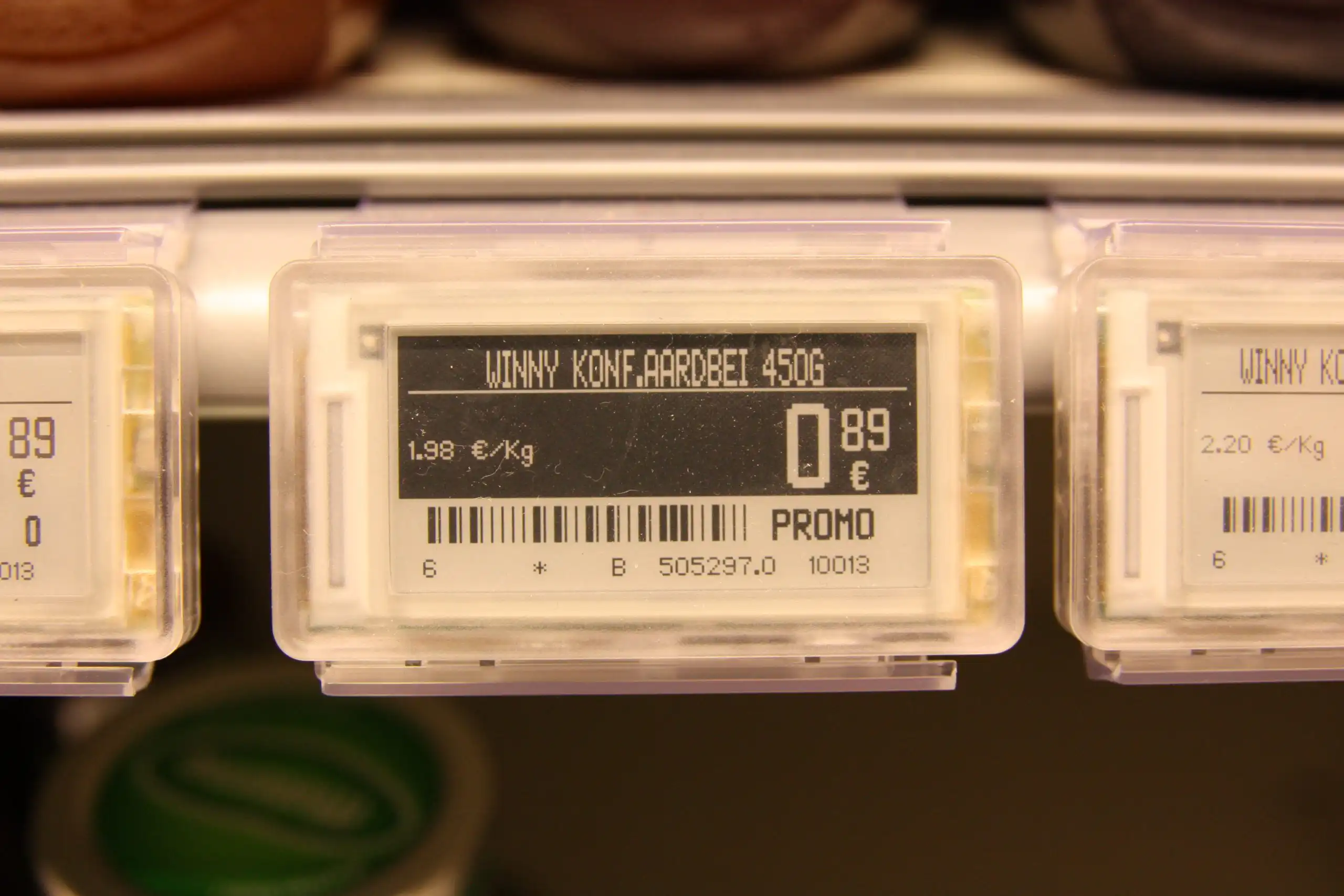
And that's good news, because any company that uses shelf labels knows how difficult it is to update them. Every price change and every discount means creating, printing, and placing new labels.
Now that both the B2B and B2C sectors recognize the benefits of e-labels (or Electronic Shelf Labels—ESL), the industry is experiencing a golden age.
According to Lee, his company’s sales of electronic shelf label hardware will surpass those of e-readers this year. This is also leading to all kinds of innovations in the sector, such as energy-efficient shelf labels. And he’s not alone in this. Revenue from the sale of digital shelf labels in 2019 is estimated at $2 billion.
Integrating with Your ERP System
E-labels, integrated with an ERP system, offer clear benefits:
Price changes only need to be entered once in your ERP system.
With just a few clicks, you can send them to all (or some) of your shelf labels. Indispensable for businesses that frequently adjust prices.
Environmentally Conscious
The shelf labels use very little energy, and you won't waste any paper or ink.
Avoiding Mistakes
The shelf labels are linked to your ERP system, so prices are verified and clearly displayed.
And easy, of course. Microsoft Dynamics 365 Business Central (the successor to Microsoft Dynamics NAV / Navision) manages all your pricing centrally. This makes things easier and ultimately leads to customer satisfaction, as it helps you avoid disputes and minimize lost revenue.
Our Consultant Jany Schamelhout Can you tell me more about the possibilities of digital shelf labels in your industry?.
You can find more information about Microsoft Dynamics 365 Business Central on our knowledge page, which includes a link to the Business Central trial so you can try out the program for yourself.
Source: Digitimes and ABI Research