But in the meantime, the world surrounding the ERP system is changing at breakneck speed.
Microsoft continues to develop Business Central as a cloud platform in which automation, data, and artificial intelligence are increasingly converging. In particular, developments surrounding Copilot and AI agents are widening the gap with older ERP environments. Microsoft now explicitly describes Copilot and agents as part of Business Central’s AI capabilities.
So the question is no longer just: Is our current NAV environment still working?
A more interesting question is:
What opportunities are we missing out on as an organization as long as we don't modernize?
From Traditional ERP to an Intelligent ERP Platform
A traditional ERP system is primarily about recording and processing data: entering orders, processing invoices, looking up items, checking inventory, and generating reports.
Those processes remain important. But Business Central is increasingly evolving from a system in which employees have to search for information to an environment in which AI helps them find and understand information and carry out tasks.
You can see this, for example, in Microsoft Copilot.
Starting with Business Central version 29, the new Microsoft Copilot experience replaces the previous Chat with Copilot-Experience from version 28. Microsoft positions this as a next-generation AI assistant that allows users to interact with Business Central using natural language.
Asking Your ERP Questions in Plain Language
One of the most interesting developments is that Business Central users are increasingly able to ask questions in the same way they would ask a colleague.
Consider, for example, questions such as:
- Show the most recent invoices.
- How do I approve a sales order?
- Where can I find this information in Business Central?
- What does this field mean?
Copilot can answer questions about Business Central data and provide support for tasks and topics within Business Central. Based on its response, Copilot can also help users navigate to the relevant information.
This changes the way employees work with ERP.
Instead of having to know exactly where information is listed, you can increasingly just indicate what you want to know.
Copilot is gaining a better understanding of your work environment
The new Copilot experience takes it one step further. With the right Microsoft Copilot license, the Business Central experience can also leverage work context—such as emails, meetings, chats, and files—through Work IQ.
That’s an important development. After all, ERP never operates in complete isolation. A sales order might originate from an email, an appointment might come from a Teams meeting, and additional information might be contained in a document.
Microsoft is bringing those worlds closer and closer together.
The new Copilot interface in Business Central also aligns more closely with the broader Microsoft Copilot experience. The goal is to provide a more consistent AI experience across Business Central and other Microsoft applications.
And AI doesn't stop at Copilot
In addition to Copilot, Microsoft is strongly committed to AI agents.
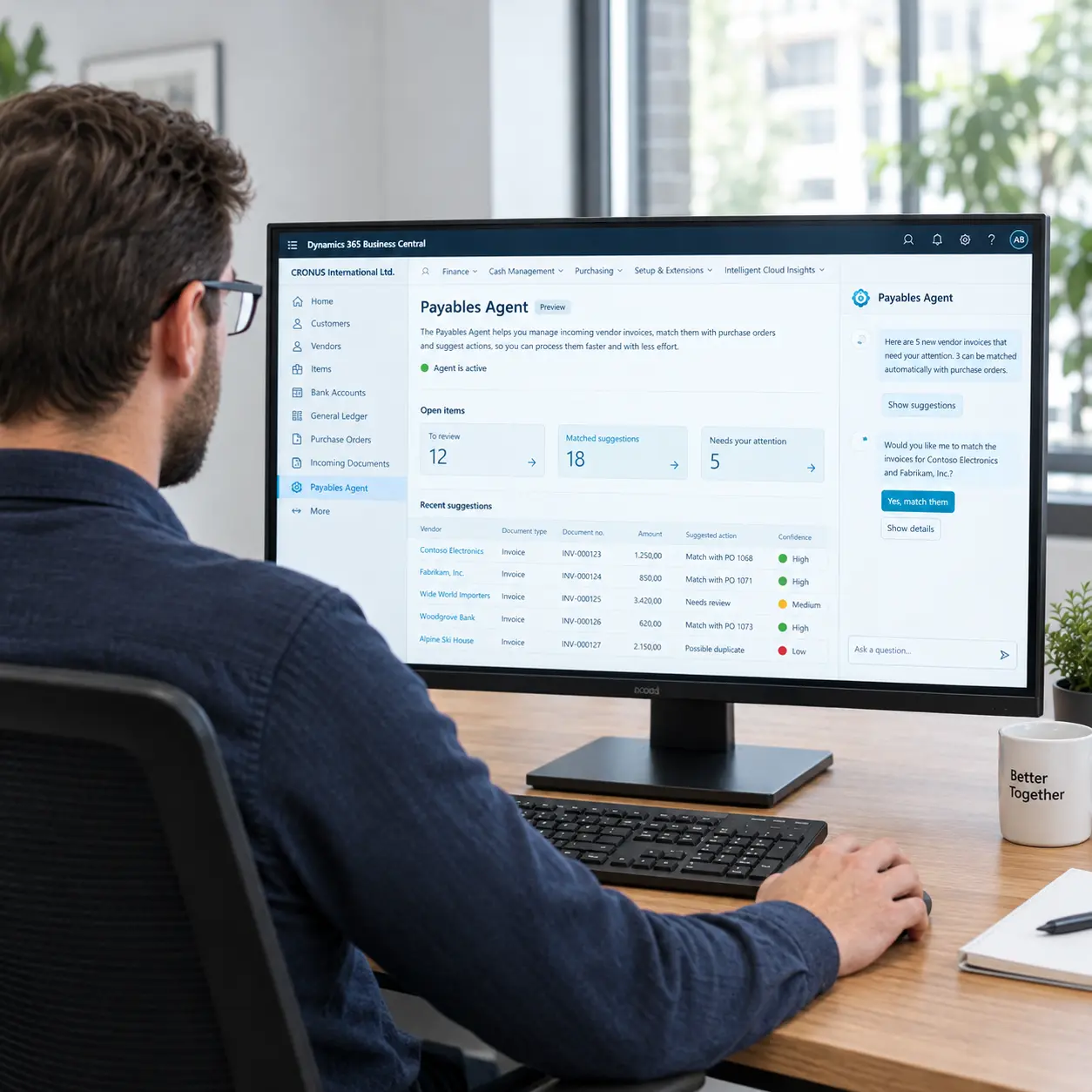
While Copilot supports employees in their work, agents can carry out specific processes with minimal human intervention. For example, Microsoft cites invoice processing and generating orders from emails as examples of tasks for which agents can be deployed. The work performed by agents remains transparent and verifiable, allowing employees to remain involved in the process.
This creates a fundamentally different ERP landscape.
The process is, roughly speaking:
NAV: Employees carry out processes in the ERP system.
Modern Business Central: ERP actively supports employees with AI.
Business Central with agents: Parts of processes can be automated to an ever-greater extent.
This makes an ERP upgrade increasingly a strategic decision rather than merely a technical migration.
What are you missing out on if you stick with NAV or an older version?
Anyone still working in NAV or an older Business Central environment should therefore not focus solely on the functionality that is currently missing.
The difference lies precisely in the pace at which new opportunities become available.
Also in our Our own analysis of Business Central 29 We are seeing that the gap with older NAV and Business Central environments is widening, particularly in areas such as AI, Copilot, agents, electronic document exchange, and automation.
As a result, the business case for modernization becomes broader.
It's not just about“We need a new version of the ERP system”, but rather, for example, to address questions such as:
- How can we reduce administrative work?
- Which recurring processes can we automate?
- How can employees find information more quickly?
- How can we make ERP easier for new employees?
- In what ways can Copilot and AI agents support our people?
- And how can we prevent the gap between us and modern organizations from widening in the coming years?
Ultimately, those are organizational issues, not software issues.
That's why a NAV upgrade doesn't start with software
That may well be the most important point for organizations considering a migration from Dynamics NAV to Business Central.
Don't start by asking what software you want to implement. Start by asking what you want to achieve as an organization.
Which processes are currently taking up an unnecessary amount of time? Where are the manual tasks? What information is missing to enable better decision-making? How do you want to work in three or five years? And what role should automation, data, and AI play in that?
Only then does it become relevant how Business Central can support those goals.
After all, an ERP modernization is an opportunity to take a fresh look at the organization—not just to replace NAV with Business Central.

ERP Transformation Masterclass: December 8 in Breda
Is the transition from NAV to Business Central—or some other form of ERP modernization—on the agenda for the coming years? If so, it’s wise for management to first consider what you hope to achieve with this change.
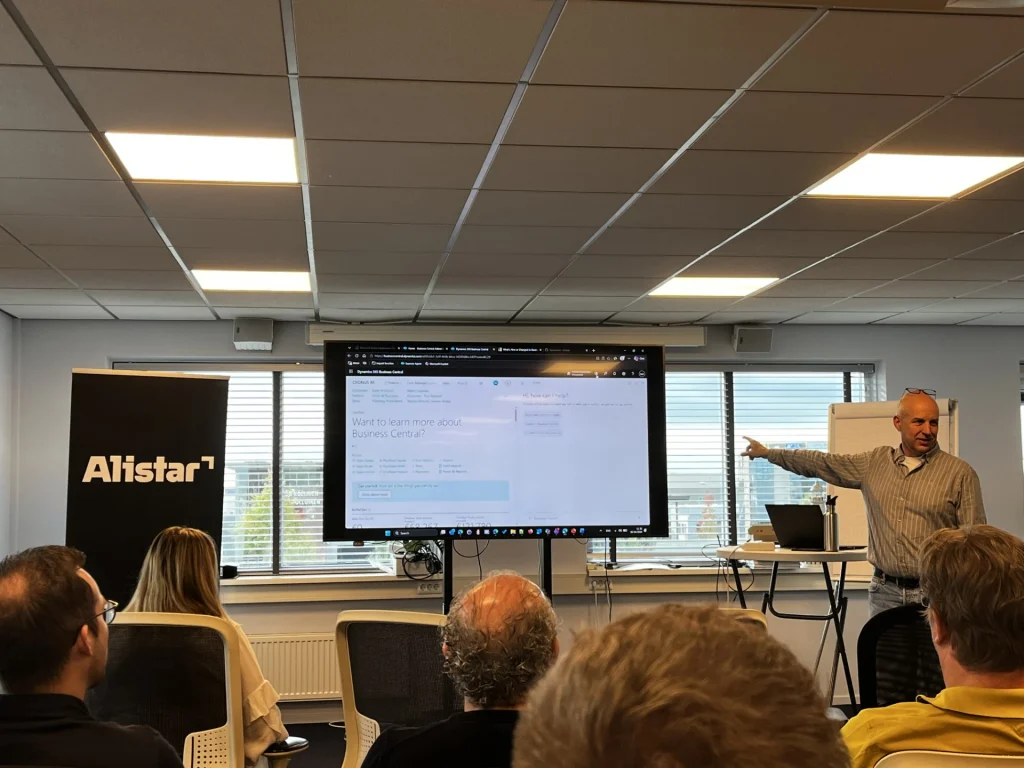
That is why Alistar is organizing on December 8 in Breda An ERP Masterclass with an international ERP expert Guus Krabbenborg. The focus of your communication is explicitly not a sales pitch or a software demo, but rather the strategic issues behind ERP modernization. The masterclass is designed for up to 20 participants.
Interested in the master class?
Check out the program and sign up.