
Who is Durabilis?
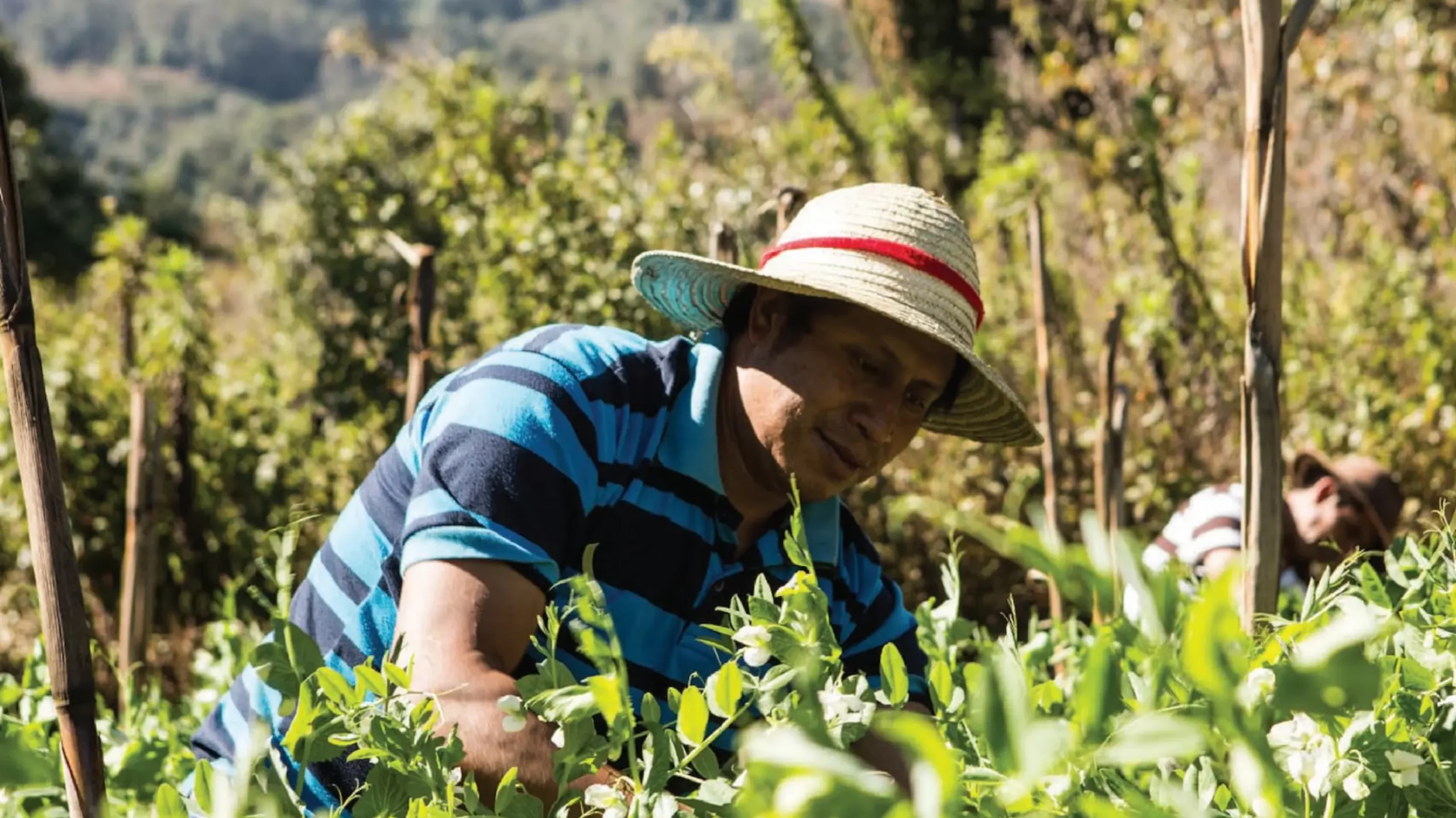
Durabilis deliberately chooses companies that, each in their own way, help address a specific social issue. In this way, the company strives to make a positive impact. Its goal is to protect the planet and accelerate the transition to sustainable food and agriculture. For example, they work with small fruit and vegetable farmers in Guatemala and Peru, which provide them with the necessary technical guidance and financing. In Burkina Faso and Mali, these are small businesses that drinking water facilitate, and in Senegal, especially to local rice production.
Since the transition to a Microsoft 365 environment, we've been able to collaborate online in earnest.
Bert Sercu, Chief Sustainability Officer
Everyone on Their Own Island
While their office in Belgium has only 16 employees, Durabilis employs about 2,200 people worldwide. Such a high degree of decentralization demands a great deal of effective communication, but that was precisely where the problem lay. So, in terms of communication and IT, there was a real challenge. “We’ve been working on harmonizing processes for a long time, but at some point, we just had to make it happen. We had 320 separate Google and Dropbox accounts—some managed by us and some not. So it was difficult to manage all of that. And it was a missed opportunity, because that way of working didn’t allow us to communicate with each other. For example, a Senegalese employee couldn’t share their calendar with a Burkinabé employee, even though they could actually be working together. We therefore decided to begin the transition to a Microsoft 365 environment, so that we could truly collaborate online. But because we work with people who don’t have much knowledge of IT, management, and follow-up, we needed professional help.”

Diving Deep
To smoothly transition the 320 administrative staff to a new IT environment, you’d expect a very rigorous step-by-step plan, but that wasn’t quite the case: “We just went for it,” Bert laughs. “This project had been postponed for so long, and the pressure to do something about it was so high. Plus, new people were constantly joining the team, so we figured, ‘If we don’t do it now, it’ll take even more work to fix it later.””
Alistar worked with Durabilis to determine when would be a good time for the migration. They decided to contact and prepare the people locally during the summer, since things tend to be a bit quieter everywhere then. Everything was prepared as thoroughly and effectively as possible—for example, all the back-office tasks: domain names, access, and the passwords for all accounts—as well as mapping out who was located where, how many people were there, and exactly what needed to be done there. Everything had to be in perfect order by that deadline.
According to Bert, however, the biggest challenge lay in preparing the local managers. “The larger companies within our group sometimes have an IT person. They aren’t seasoned project managers with a lot of experience, but they are reliable points of contact whom we could keep informed. But still… We’re physically so far apart, and those people have so many other important things on their minds. So we couldn’t just assume that everything would work out on its own without the necessary follow-up. I often wondered if we were really ready for this.”
The Right Attitude
“But then the deadline came, and we decided to go for it after all. The fact that it turned out to be such a positive experience is mainly thanks to our Alistar consultant, Jack,” Bert admits. “He’s someone with a lot of energy and the right attitude. Our employees really appreciated how he worked with them—patient on the one hand, yet driven on the other. He’s really made a name for himself in all those countries!”
Alistar Consultant Jack essentially provided the employees with a kind of ‘on-the-job training,’ although the word ‘training’ might be an exaggeration. They just got to work, and as they went along, they would ask questions that Jack answered for them. “That’s just how we’re used to working—not too many formalities, workshops, and the like. We’re really ‘hands-on’—it’s in our DNA… We constantly evaluated things throughout the entire process,” Bert explains. “Luckily, Alistar had good checklists for that, where everyone could fill in their progress. Where things were going wrong or not fast enough, Jack could give them a little nudge.”

Security, costs, day-to-day operations, … Microsoft 365 is an improvement in every way.
Benefits
Bert is clear about the benefits of their switch to the Microsoft suite: “My biggest concern was security. How would things turn out with Dropbox folders being shared everywhere? Google accounts with different security settings? Who can create which accounts? When people leave, are they actually removed? These were all issues we had absolutely no visibility into. That concern is now gone. It will also definitely result in cost savings. And, of course, day-to-day operations run much more smoothly. WhatsApp, Skype, Google Chat… It was all a jumble, and you had to be available on five platforms at the same time. To be honest, that was exhausting, especially since we’re in different time zones. Information was constantly coming in—it was unsustainable! Now, chats and calls go through Teams, with a single calendar that everyone can see. It’s working incredibly well.”
And the users themselves are enthusiastic, too: “They see the benefit. Jack also took the time to clean up their laptops and computers, and they’re very happy with that. Their devices work well, and they’re all running the same version, so they’re all on the same page. It’s the little things like that that make all the difference.“