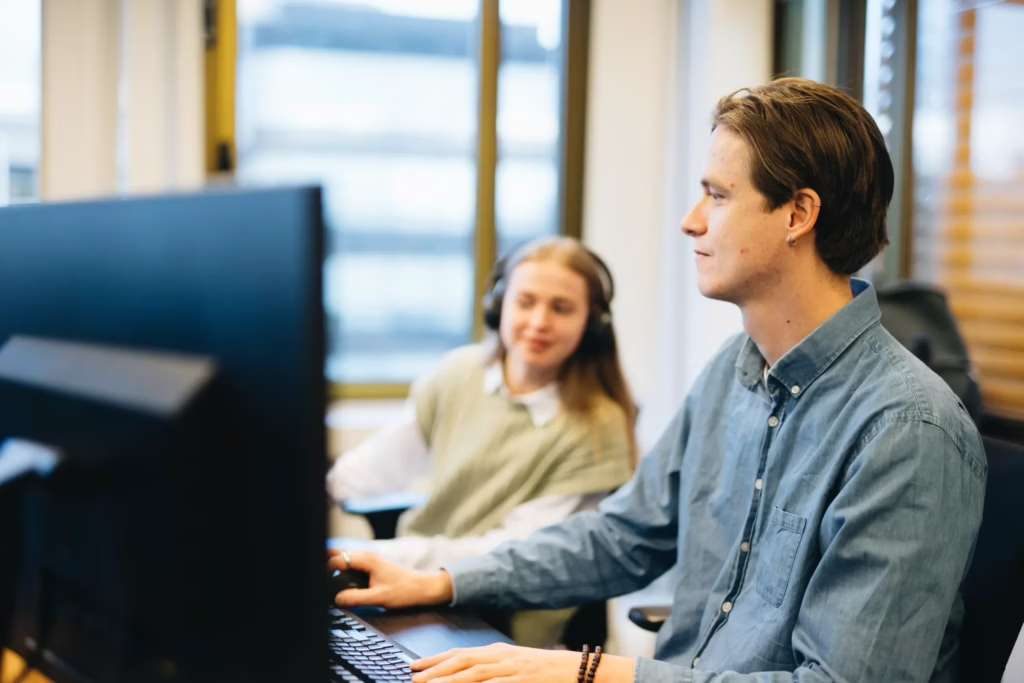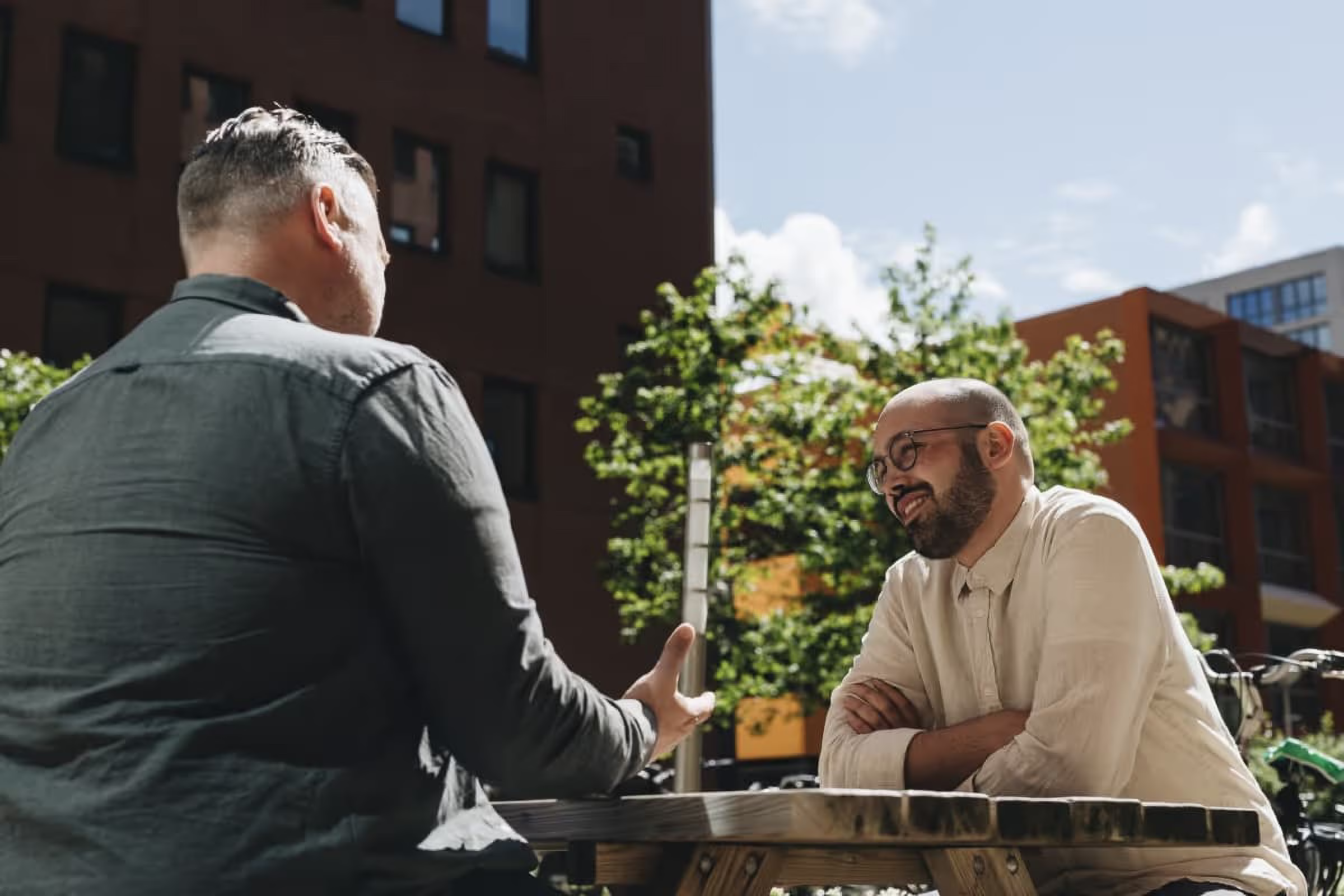

Erik: Our request was that we needed extra people on an on-call basis at the service desk—specifically, people who possess a certain service-oriented mindset and ability to connect with others. I was already familiar with Alistar’s vision, and it resonated with me. In this role, it’s not necessarily about whether you have a background in IT; it’s about mastering the art of taking people’s worries off their hands. As a service desk, you’re constantly taking the pressure off your colleagues. They always need to feel confident that everything will work out. It’s been a success; we’re now working together on a permanent basis and have expanded our partnership to include process management as well.
“It’s a positive thing that Alistar staff members often don’t have a background in IT.”
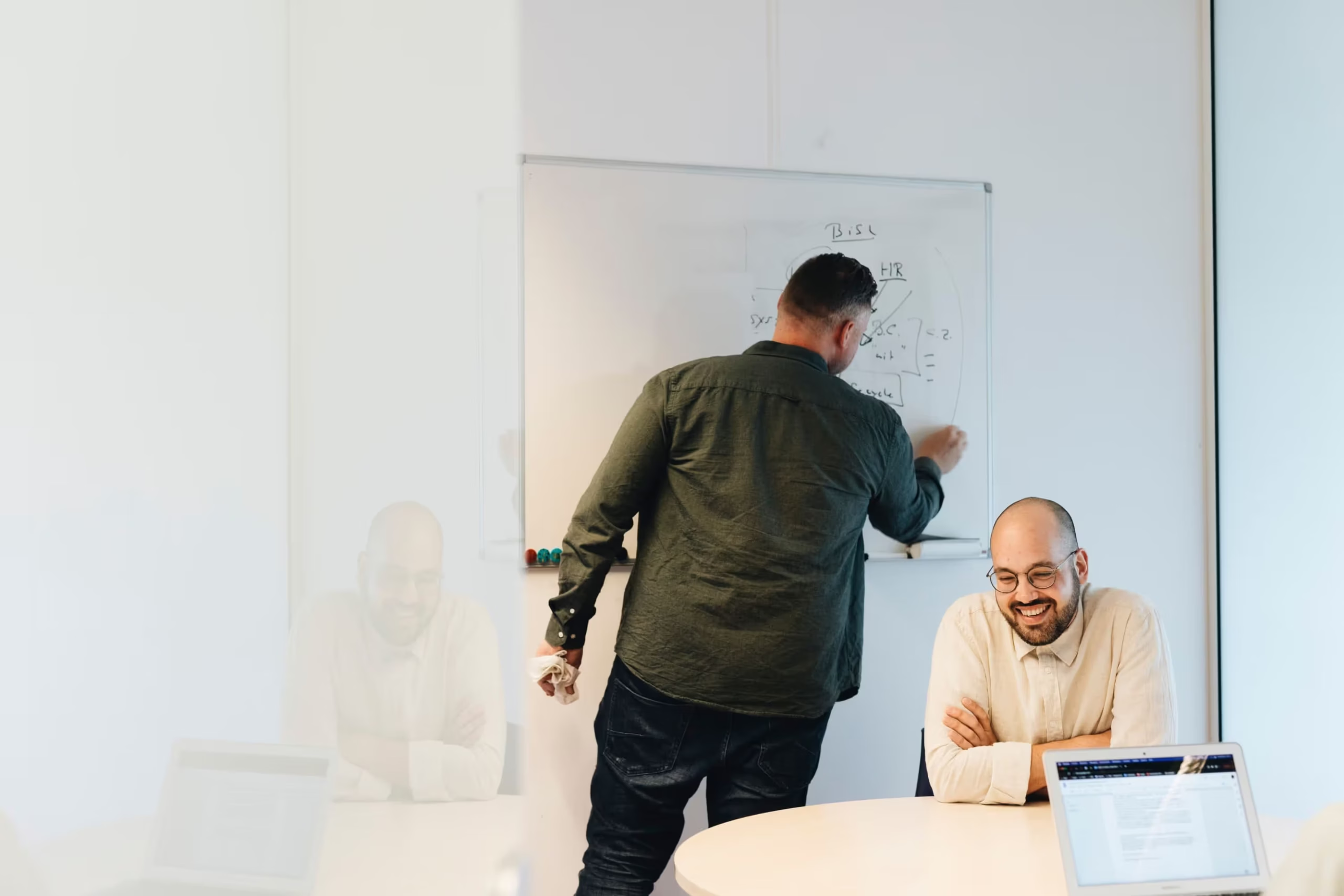
Leander: As a process manager, it’s my responsibility to resolve incidents and problems reported by the organization as quickly as possible. That may sound like the same thing, but a problem is a larger issue—it consists of multiple incidents with the same root cause. This means there’s an underlying issue that we often have to resolve in collaboration with other departments. The Process Management Team consists of four process managers, with whom we hold weekly meetings because many processes overlap. I also work closely with the application management team. Short lines of communication are incredibly important in our work: if a priority-1 incident occurs, we can immediately coordinate with the application managers to resolve the problem as quickly as possible.
Mike: That solution-oriented approach is essential. It’s actually a positive thing that Alistar staff members often don’t have a background in IT. They’re less influenced by the kind of experience you gain in IT, and they don’t take things for granted. They’re very service-oriented, and they also pick up technical skills quickly.
Erik: That’s also why this partnership works for both parties. Together with Alistar, we took a close look at how we could join forces. Through this work, Alistar staff members quickly learn what it means to work at a service desk—and then what it’s like to be part of other departments within a large organization. And we’re glad to have the extra help. We receive around 90,000 requests annually. That requires a well-oiled machine. Together, we’ve created that machine.
Mike: That’s really how it feels to us, too. We welcome everyone, whether you’re under contract with Parnassia, Alistar, or another company. In this department, we’re practically on top of each other day and night; we’re constantly working together to provide the best service. That creates a sense of connection.
The greater the impact on healthcare, the faster we'll provide assistance.
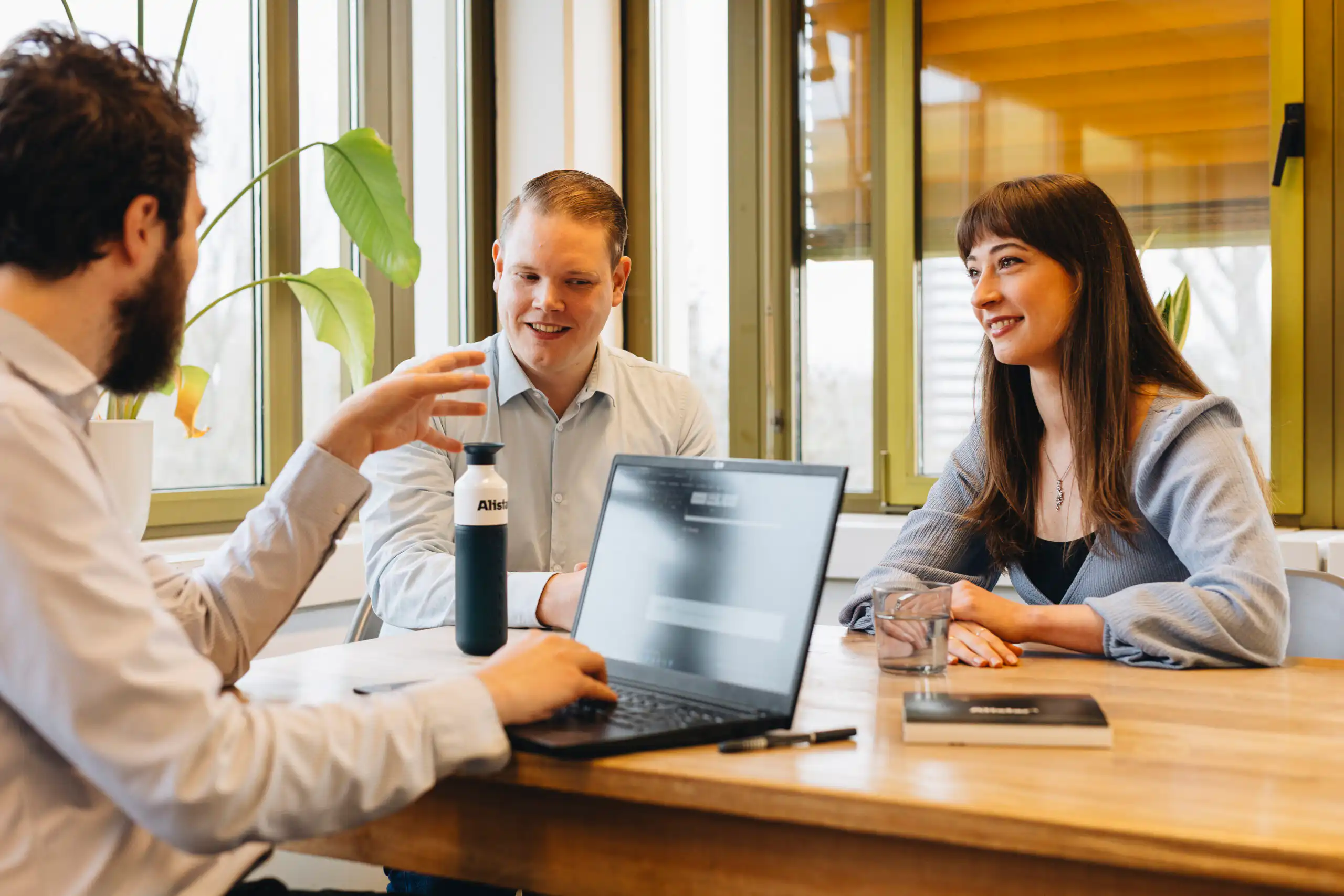
Leander: I really like it, too. The incident management part was already pretty much up and running when I got here, but I’ve worked hard on Problem Process. In many organizations, PM is the neglected stepchild. I kind of understand why—because an incident is almost tangible: you have a problem right now, and it needs to be solved right now. In Problem Management, you look at an underlying problem. There are often workarounds for those, which means the real problem often gets pushed into the background. I’ve made sure these processes are now getting more attention—it’s even an item on our weekly agenda now. I achieved this by consistently asking questions of everyone involved and demonstrating how valuable solutions can be for all parties. This creates a sense of flow in the processes and teams. And it’s worked out well, because the number of problems has since been cut in half.
Erik: We do all of this for the end user. That end user, by the way, is very diverse—ranging from support staff to nurses to secretaries. Many of these people are in direct contact with patients, so our work really has to be top-notch. If the device they’re using isn’t working, they want—and need—immediate assistance. That’s why you need good people who understand the situation of the person on the other end of the line. That empathy and service-oriented mindset have to come naturally to you. And we’re actually doing quite well in that regard: our service desk is able to resolve 83% of those tens of thousands of requests. And the teams at Leander, for example, are working very hard on the rest. We’re very proud of that. We’re all people with a passion for healthcare.
Leander: The biggest part of success involves building support and showing people that everyone has a stake in solving the problems—even if it doesn’t directly affect your own department. It’s about the overarching need, whether you work at the service desk, in process management, or in telecommunications. That’s why we conduct impact analyses for all incidents and issues. This allows us to see how much of an impact they have on the end user and helps us prioritize our work effectively. And afterward, we write reports: what went wrong, how did we resolve it, and what can we do to prevent it in the future? This is extremely valuable, including for external parties we collaborate with—and therefore for our service desk as well.
Nienke: One of the processes we’re currently working to improve as a result is incident reporting. Parnassia employees currently do this mainly by phone, but we’re now encouraging reports via a form on our digital service portal. That’s more efficient, and it also makes it easier for us to prioritize reports. We’re working hard to optimize the system, and we’re already seeing from the numbers that the number of phone calls is steadily decreasing. But we certainly don’t intend to get rid of the phone number—of course, you should always be able to speak to someone if you have a problem.
Erik: I think that’s why Alistar staff members fit so well within our organization—because they feel the freedom to take responsibility and suggest improvements. I don’t see that as much with other vendors we hire. They help you, do their job, and that’s where it ends. That’s where Alistar really sets itself apart from the rest.
“You learn a lot very quickly here.”
Nienke: One of the reasons you’re hired at Alistar is because you’re a fast learner. At Parnassia, we get excellent guidance: all the systems and processes are explained thoroughly, and it’s very clear where to find information. And after two weeks, it’s time for your first real phone call—that’s when you really have to stand on your own two feet and are forced to solve problems. That’s how you learn a lot very quickly.
Mike: They’re all young, passionate, and motivated people who are eager to learn. They bring a breath of fresh air to the company. I love seeing how they develop here over the course of a year, and then go on to grow further elsewhere. That’s also very healthy.
Erik: For me, Alistar’s strength in this partnership really lies in taking the pressure off us. Two years ago, we were in a real bind—a lot of people were leaving, and the job market was, and still is, extremely tight. We have 14,000 colleagues here and process 90,000 reports per year. So it’s really great that we now have enough capacity to help all our colleagues as best as we can and minimize incidents and problems.
Want to make your workplace future-proof?
We'd be happy to tell you more about how we work and how we can help your organization move forward.
Please provide your contact information. One of our team members will get in touch with you as soon as possible. There’s no obligation on your part, of course.