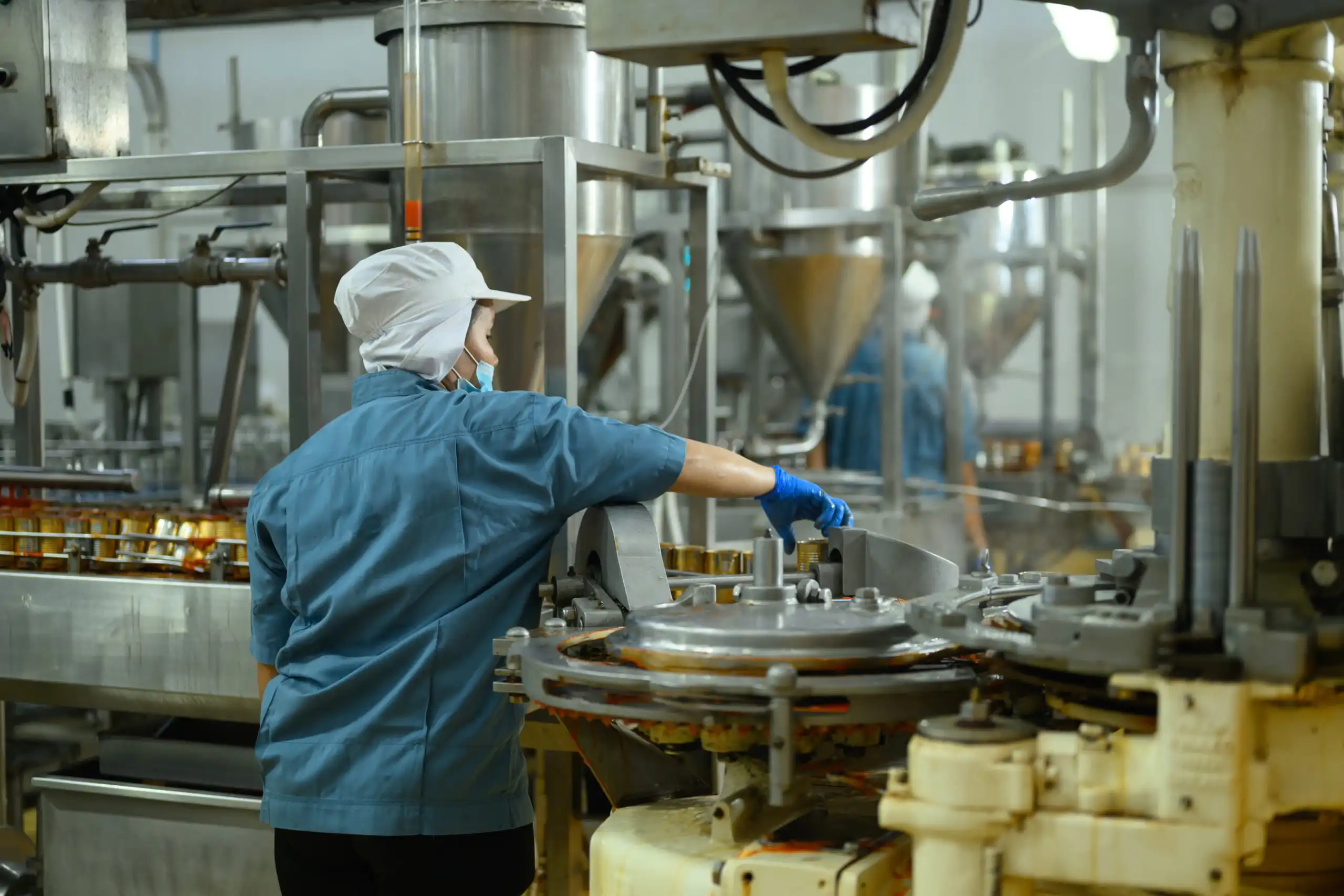
Companies operating in the food industry face all kinds of specific challenges. For example, you must not only efficiently fulfill customer orders, manage recipes, monitor inventory, and manage production planning. You must also comply with increasing regulations from both the government and the industry itself regarding hygiene and traceability. And all of this in an increasingly competitive environment. This requires companies in this sector to have clear work processes, which can be optimally supported by modern IT systems. It is crucial that all these challenges are addressed by an ERP system developed specifically for the food industry. This means that functions such as distribution, warehousing, CRM, and accounting are combined with features specifically designed for the food industry.
How exactly can an ERP system help food companies? Here, we’ll go over the most important ERP-related aspects that matter in the food industry:
Cost Accounting and Reporting or Business Intelligence
Food companies typically operate in an environment characterized by high volumes and low margins. Because a good ERP system makes it easy to calculate production costs, it is straightforward to determine the total profit margins for specific product groups, right down to the cost of individual ingredients.
Reporting is also an extremely important feature. For example, it is common in the food industry for promotions to be run, for which customers request special prices or promotions from wholesalers. As a business, you therefore need to be able to monitor profitability: which customer purchased which products, in what quantities, and what is the margin, taking current promotions into account. Your ERP system must allow you to flexibly manage all the different discount systems (by customer category, product category, date, quantity purchased, etc.). Read more about Business Intelligence.
Labeling
The new and (constantly) changing labeling requirements—both from the government and the industry—make labeling automation a necessary step. For example, formulas and ingredients may change, but the right ERP solution will automatically update the labels accordingly. Distribution can also be fully integrated with the scales and the labeling system. This ensures that every outgoing item is weighed.
Traceability
It is essential that the software you use enables full forward and backward lot tracing for every ingredient and finished product in order to minimize the risks associated with a product recall. For example, all products have a barcode at three levels: product, bin, and pallet. The major advantage of ERP software In this area, you can specify additional information—such as the lot number, net weight, and best-by date—in addition to the identification number. This helps ensure the traceability of the items. The inventory management module assigns lot numbers and ensures thorough monitoring of expiration dates.
Inventory
Inventory management is extremely important for businesses because, of course, there’s no point in inventory taking up space longer than necessary. With the right ERP system, real-time information about what’s in stock can be provided. Especially for businesses that handle fresh products, effective inventory management can make a huge (financial) difference. The return of goods can also become much less labor-intensive. This is integrated into the ERP system, making the process not only more efficient but also more controlled. An ERP solution can be developed to implement various internal checkpoints, thereby monitoring the quality and safety of the food at different stages.
Streamlining Information
As your business grows, challenges may arise in maintaining open and seamless communication between departments. A well-developed ERP system not only automates purchasing, sales, inventory, production, and accounting, but also streamlines the entire flow of information that results from these processes. Thanks to this integration, duplicate data entry is no longer necessary. This allows the company to operate even more efficiently, thereby reducing the margin of error. It also enables the generation of better management information, such as lead times, product history, and more. A good example is an ERP system that helps companies improve their customer service by linking it to a CRM that always contains the latest information. Management can also run ‘what-if’ scenarios directly within the ERP system, drawing data not only from accounting and financial records but also from up-to-date marketing trends, historical consumption patterns, formula management, and so on.
Of course, there are a number of other areas in which ERP systems need to excel. Think of invoicing, purchasing and sales, dispatching, picking, and so on. In this post, however, we’ll limit ourselves to those areas in which food companies differ from other businesses.
Implementing Business Central as an ERP solution doesn't have to be a complex or opaque process.
As a Microsoft Certified Partner with a team of Business Central experts, we have helped more than 300 companies successfully implement ERP.