
When designing a website, application, blog, etc., choosing the right Content Management System (CMS) is essential. Today, the choice is between a traditional CMS and a headless CMS. This choice has a major impact on your website’s flexibility, scalability, and capabilities. In this podcast, we discuss the pros and cons of both systems.
What is a traditional CMS?
A traditional CMS, such as WordPress, Joomla or Drupal, is an all-in-one platform that manages both content creation and presentation on the website. The website or application that displays the content to the visitor or user is closely integrated with the management system where the content is edited and managed. It offers a user-friendly interface for creating and publishing content.
What is a headless CMS?
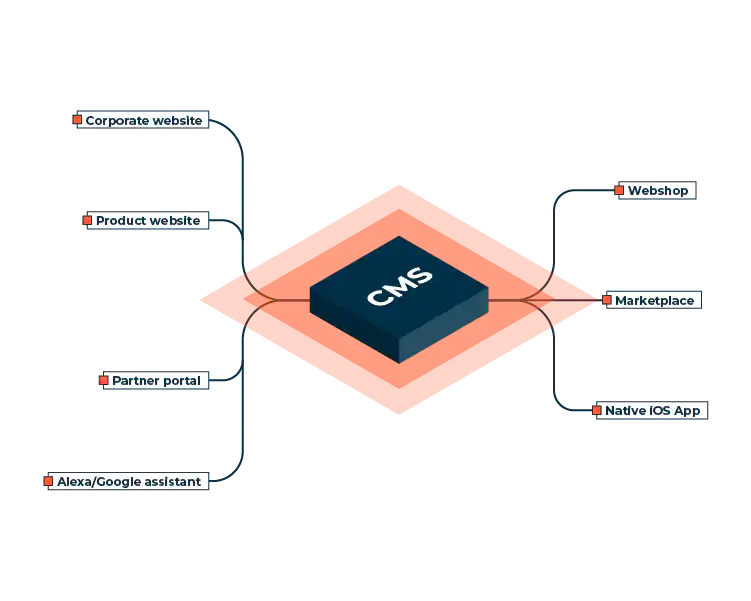
Unlike traditional CMS systems, a headless CMS is separate from the website's presentation layer. Examples of this include DatoCMS, Contentful, or Strapi. The headless CMS focuses exclusively on content creation and management. The content is made available to the front end via APIs, and the front end can be developed using various technologies. This gives marketers and website developers more freedom to customize the user experience and deliver content across multiple channels, such as websites, mobile apps, and IoT devices.
According to David De Sloovere, Competence Lead | E-Commerce at Alistar, “With a headless CMS, you can use other technologies when developing your own application—technologies that may be better suited to the application. This will also improve the application’s performance, since you aren’t bound by the “fixed” framework imposed by a (traditional) CMS system.”.“
How do you choose the right CMS?
Although headless CMSs continue to grow in popularity thanks to digital transformation, they aren’t always the right choice by definition. For smaller websites with simple content needs, a traditional CMS may be sufficient due to its user-friendliness and quick implementation. However, if you’re looking for more flexibility, scalability, and the ability to deliver content across multiple channels, a headless CMS is the recommended choice. A headless CMS is also the better option, especially for larger companies with complex content strategies. Ultimately, the choice of CMS system must align with the long-term growth and development of your website.
Want to improve your e-commerce business?
Here is some additional information about the download or promotion.


