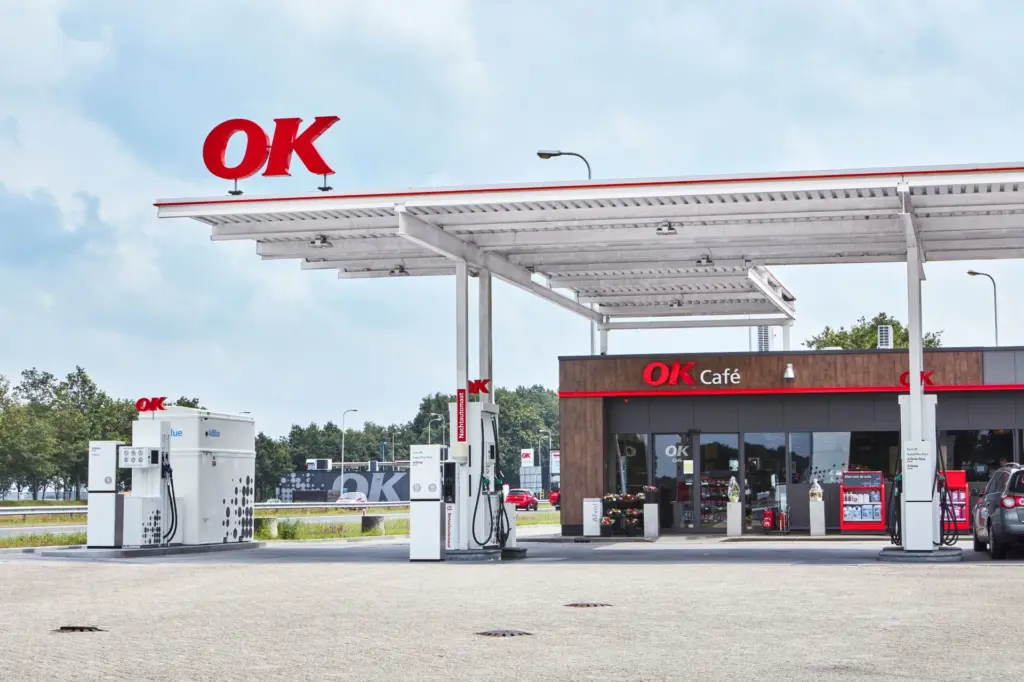
With FuelVision365, you have a single system to automate and optimize your business processes.



FuelVision365 has a modular design. You can choose which extensions are important for your gas business and avoid paying for software you don't use.
Watch the video to see how FuelVision365 automates your gas station. Discover all the features in our fact sheet.
Streamline your workflows and save valuable time by replacing manual data entry with smart automation. Microsoft Dynamics 365 Business Central offers a comprehensive solution for seamlessly integrating your administrative, financial, manufacturing, and logistics processes.

The right extensions can help streamline your gas station's business processes. Which ones, exactly, depends on your specific needs.
Easily manage store inventory, promotions, and orders with real-time insights and smart purchasing recommendations. Automate fuel card billing, integrate with POS systems, and synchronize customer data for optimal control.
The Core extension is the heart of FuelVision365 and includes essential features for automating your core processes.
Find out how Business Central and our industry solutions can help you. Download the fact sheet or contact us.
ERP (Enterprise Resource Planning) for gas stations is a software system specifically designed to streamline all core processes of a gas station, such as inventory management of fuels and products, invoicing (including fuel card invoicing), financial accounting, customer data management, and integration with the point-of-sale (POS) system. It centralizes data on a single platform, leading to more efficient operations, fewer errors, improved decision-making, and greater customer satisfaction through real-time insights into sales and customer behavior.
The FuelVision365 Retail module is used to automate gas stations, including for managing store inventory, generating purchase recommendations, and automating fuel card billing.
FuelVision365 supports multi-shop management from a central platform. Among other things, headquarters can centrally manage products, purchasing, and pricing strategies, while individual gas stations can set their own prices, manage local inventory, and maintain their own operational processes. Purchasing requests from different locations can be consolidated and processed centrally. This allows headquarters to maintain control and oversight, while individual gas stations retain sufficient operational autonomy.
FuelVision365 supports multi-shop management from a central platform. Among other things, headquarters can centrally manage products, purchasing, and pricing strategies, while individual gas stations can set their own prices, manage local inventory, and maintain their own operational processes. Purchasing requests from different locations can be consolidated and processed centrally. This allows headquarters to maintain control and oversight, while individual gas stations retain sufficient operational autonomy.
FuelVision365 supports inventory-driven purchasing for gas stations and can generate purchasing recommendations based on factors such as minimum inventory levels, historical sales data, and seasonal trends. Individual stores can submit purchase requests, which headquarters then consolidates centrally and processes into orders with suppliers. The goods are subsequently received and recorded at the respective location. In this way, FuelVision365 combines local inventory needs with centralized purchasing.
FuelVision365 tracks inventory changes and provides insight into the current retail inventory at gas stations, in part by processing TRX files. Employees can record the receipt of goods, inventory counts, breakage, spoilage, and other inventory changes. Scanners—such as those on a smartphone with Bluetooth—can also be used during inventory processes. This provides both the individual store and headquarters with insight into inventory levels and inventory movements.
FuelVision365 helps gas stations centrally manage purchase prices, retail prices, and margins. Supplier prices can be imported, and price changes can be assigned effective dates. It also allows for different price levels per location, and prices can be adjusted in bulk using price spreadsheets. FuelVision365 can also calculate margins and generate price labels for both physical and digital use. This enables gas station chains to centrally manage their pricing strategy and apply it on a per-location basis.
FuelVision365 supports the management of fuel cards, from price and discount agreements to spending limits and authorized products. Fuel cards can be blocked, and specific rules can be applied through whitelisting and blacklisting. Transactions are recorded and can be consolidated for automated invoicing. Clearing can also be part of the process. This allows you to manage fuel card transactions, customer agreements, and invoicing from a single system.
FuelVision365 can be integrated with point-of-sale systems and POS solutions used at gas stations, including Tokheim. This allows transaction data from the POS system to be processed in FuelVision365, for example, for fuel card transactions, clearing, and invoicing. Data such as blocked cards and incorrect PINs can also be made visible. FuelVision365 can also be integrated with other cash register systems and external solutions, ensuring that relevant data is synchronized across the various systems.
FuelVision365 provides gas station chains with insights into commercial, financial, and operational data. Reports can, for example, provide insights into discounts, gross and net margins, price elasticity, inventory, cash discrepancies, sales peaks, and slow- and fast-moving items. Tools such as Excel, ExSION, and Power BI can be used for this purpose. Analyses can be performed by store, gas station, or region, allowing organizations to compare performance across locations and make more targeted decisions.
FuelVision365 can use Copilot to help users extract information from their business data more quickly. Users can ask questions in natural language, perform analyses, and generate reports without having to manually collect all the data. For example, information about products or suppliers can be grouped and analyzed more quickly. This makes it easier to use data from FuelVision365 for daily analyses and decision-making.